![Free Printable Editable Bill of Sale Form Template [PDF, WORD]](https://billofsale.authorizationletter.org/wp-content/uploads/2026/06/billofsale_logo-206x48.png)
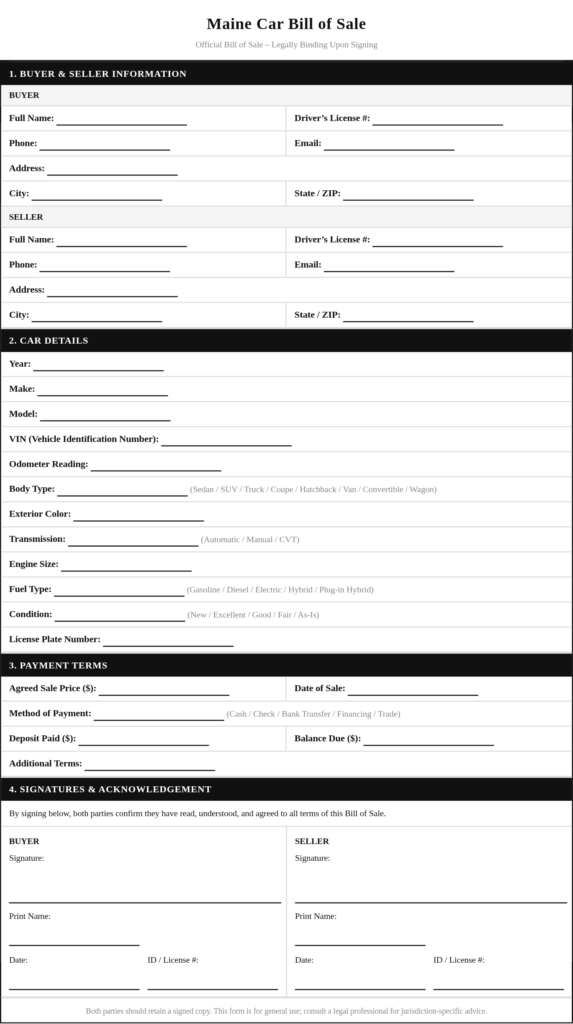
A Maine Car Bill of Sale is a legal document that records the transfer of ownership when you buy or sell a vehicle in the Pine Tree State. This written agreement serves as proof of purchase and protects both the buyer and seller by documenting important details like the sale price, vehicle identification number, odometer reading, and the date of transaction. Whether you’re purchasing a used sedan from a private seller in Portland or selling your truck in Bangor, having a properly completed bill of sale form is essential.
While Maine law doesn’t always require a bill of sale for every vehicle transaction, it’s a smart practice that creates a clear paper trail. This purchase record becomes especially important when registering your newly acquired car with the Maine Bureau of Motor Vehicles or resolving any disputes that might arise after the sale. The document also helps establish the sale price for tax purposes and provides documentation if questions come up about the vehicle’s ownership history.
Free Printable Maine Car Bill of Sale Template [Editable]
Benefits of Maine Car Sale Agreement
- Provides legal proof of ownership transfer that the Maine BMV recognizes when you register your newly purchased vehicle
- Documents the exact purchase price, which helps you calculate the correct excise tax owed to your Maine municipality
- Protects sellers from liability after the sale by creating a dated record showing when they transferred the car to a new owner
- Establishes an as-is sale agreement, which is common in Maine private party transactions and limits seller liability for future mechanical issues
- Creates a written record of the odometer reading at the time of sale, which complies with federal disclosure requirements and Maine consumer protection standards
- Serves as a backup document if the title is delayed or lost during the transfer process, helping you prove ownership while waiting for Maine BMV paperwork
What type of Car can it be used for?
This Maine car bill of sale can be used for any type of passenger vehicle, including sedans, coupes, hatchbacks, station wagons, and compact cars. It works for both newer model vehicles and older classics, whether you're buying from a private individual or selling to a friend or family member. The form is suitable for standard automobile transactions throughout Maine, from coastal communities to inland towns.
Mistakes you should avoid while signing a Maine Car Bill of Sale
- Forgetting to record the correct Vehicle Identification Number, which must match the title exactly and contains 17 characters for modern vehicles
- Leaving the purchase price blank or writing 'gift' when money actually changed hands, which can cause issues with Maine excise tax calculations
- Not getting signatures from both the buyer and seller on the same day as the transaction, creating confusion about when ownership actually transferred
- Failing to document the accurate odometer reading at the time of sale, which violates federal disclosure laws and Maine consumer protection rules
- Using vague language about the vehicle's condition instead of clearly stating it's sold as-is, which can lead to disputes about warranties or repairs
- Not keeping a signed copy for your own records, leaving you without proof of the transaction if questions arise later
Required Documents for Maine Car Sale Agreement
- Maine Certificate of Title signed by the seller in the designated assignment section, showing a clear chain of ownership
- Valid photo identification for both buyer and seller, such as a Maine driver's license or state-issued ID card
- Completed bill of sale form with all required information including VIN, odometer reading, sale price, and signatures from both parties
- Maine Application for Title and Registration (form MVT-1) if the buyer plans to register the vehicle immediately
- Proof of Maine insurance coverage in the buyer's name, required before the vehicle can be registered with the BMV
- Release of lien documentation if there's an outstanding loan on the vehicle, showing the lender has been paid and releases their interest
Frequently Asked Questions
Does Maine require a bill of sale to register a car?
Maine doesn't legally require a bill of sale to register a vehicle if you have a properly assigned title. However, the Bureau of Motor Vehicles strongly recommends having one because it serves as valuable proof of purchase price for excise tax purposes and provides documentation of the transaction date. Many town clerks who handle vehicle registrations prefer to see a bill of sale alongside the title.
Does a car bill of sale need to be notarized in Maine?
No, Maine does not require notarization of a car bill of sale for the document to be valid. Simple signatures from both the buyer and seller are sufficient to create a legally binding sales agreement. That said, some people choose to have the document notarized for extra security and peace of mind, even though it's not mandatory under Maine law.
How do I fill out a bill of sale for a car in Maine?
Include the full legal names and addresses of both buyer and seller, along with the complete vehicle information such as year, make, model, and the 17-digit VIN. Write the exact odometer reading, sale price in numbers and words, and the date of sale. Both parties should sign and date the form, and each person should keep a copy for their records.
Can I use a handwritten bill of sale in Maine?
Yes, a handwritten bill of sale is perfectly acceptable in Maine as long as it includes all the essential information about the vehicle, buyer, seller, and terms of sale. Make sure your handwriting is clear and legible so there's no confusion about any details. Many people prefer printed forms because they include prompts for all necessary information, but handwritten versions work just as well legally.
What should I do with my bill of sale after selling a car in Maine?
Keep your signed copy of the bill of sale in a safe place with your other important documents for at least several years after the sale. This purchase record protects you if any questions arise about when you sold the vehicle or disputes about the sale terms. You should also remove the license plates and notify your insurance company that you've sold the car to avoid any liability for what the new owner does with the vehicle.
Conclusion
Getting a proper bill of sale when buying or selling a car creates a solid paper trail that protects everyone involved. This simple legal document helps you register your vehicle with the Maine DMV, proves the purchase price for tax purposes, and serves as a permanent record of the transfer of ownership. Taking a few minutes to complete a sale agreement correctly can save you from headaches down the road.
Whether you're completing an as-is sale between friends or purchasing from someone you just met online, having a signed copy of your purchase record is essential. Keep your bill of sale form with your other vehicle paperwork, and make sure both parties walk away with their own copy. This straightforward approach to documenting your transaction gives you confidence and legal protection for years to come.