![Free Printable Editable Bill of Sale Form Template [PDF, WORD]](https://billofsale.authorizationletter.org/wp-content/uploads/2026/06/billofsale_logo-206x48.png)
A Kansas Car Bill of Sale is a legal document that records the transfer of ownership when a vehicle changes hands between a private seller and a buyer. This written agreement provides essential proof of purchase and protects both parties by documenting the transaction details, including the sale price, vehicle identification number, and the condition of the car at the time of sale. Whether you’re buying or selling a used car in Kansas, having a properly completed bill of sale form is crucial for your records.
This purchase agreement serves as your official receipt and helps establish a clear chain of ownership for the vehicle. While Kansas law doesn’t always require a notarized bill of sale for every car transaction, having this signed copy can prevent disputes and provides documentation needed when registering the vehicle with the Kansas Department of Revenue. The document also protects buyers by confirming what was agreed upon, especially in as-is sales where the seller provides no warranty on the vehicle’s condition.
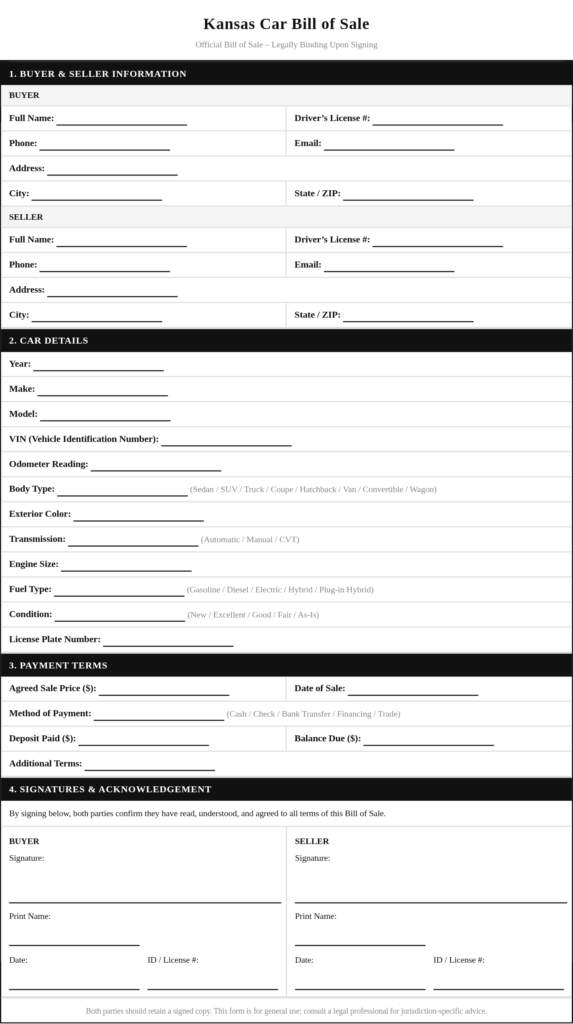
Free Printable Kansas Car Bill of Sale Template [Editable]
Benefits of Kansas Car Sale Agreement
- Provides legal proof of ownership transfer that satisfies Kansas Department of Revenue requirements when registering your newly purchased vehicle
- Protects both buyer and seller in private party transactions by documenting the agreed-upon purchase price, which can help with Kansas sales tax calculations
- Creates a permanent purchase record that establishes the transaction date, which is important for Kansas vehicle registration deadlines and tax filing purposes
- Documents as-is sales clearly under Kansas law, protecting sellers from future liability claims related to vehicle condition after the sale is complete
- Serves as proof of purchase price for Kansas residents claiming sales tax exemptions on family transfers or documenting insurance claims
- Helps establish a clear chain of title that prevents ownership disputes and simplifies the Kansas DMV title transfer process
What type of Car can it be used for?
This Kansas bill of sale form can be used for any type of car transaction in the state, including sedans, coupes, hatchbacks, station wagons, and passenger vehicles. Whether you're buying or selling a new or used car through a private sale, this legal document records the transfer of ownership. The form works for vehicles sold as-is or with specific conditions, and it applies to both running and non-running cars being transferred between Kansas residents.
Mistakes you should avoid while signing a Kansas Car Bill of Sale
- Forgetting to include the complete vehicle identification number (VIN), which is essential for Kansas DMV processing and prevents title transfer delays
- Leaving the odometer reading blank or recording it inaccurately, as Kansas law requires honest odometer disclosure to prevent fraud
- Not having both buyer and seller sign and date the document on the same day the transaction occurs, which can create legal complications
- Failing to include the actual purchase price or writing 'gift' when money changed hands, as this can cause problems with Kansas sales tax reporting
- Neglecting to provide a signed copy to both parties, leaving one person without proof of the transaction for their records
- Skipping important vehicle condition details in as-is sales, which can lead to disputes about what the buyer actually agreed to purchase
Required Documents for Kansas Car Sale Agreement
- Kansas Certificate of Title signed by the seller in the appropriate section, transferring ownership to the new buyer
- Completed Kansas Car Bill of Sale showing the purchase price, vehicle details, and signatures from both parties involved in the transaction
- Valid government-issued photo identification from both the buyer and seller to verify identities during the sale
- Current vehicle registration documents showing the seller's name matches the title and proving the car's registration status
- Odometer Disclosure Statement if the vehicle is less than ten years old, as required by Kansas and federal law
- Vehicle history report or maintenance records if available, to provide the buyer with information about the car's condition and past
Frequently Asked Questions
Does Kansas require a bill of sale for a car?
Kansas does not legally require a bill of sale to transfer a car title, but it is highly recommended for both parties. The Kansas DMV accepts the signed title as proof of sale, but having a separate bill of sale form provides additional documentation of the purchase price and transaction details. This purchase record can be essential for tax purposes and resolving any future disputes.
Does a Kansas car bill of sale need to be notarized?
A bill of sale for a car in Kansas does not need to be notarized to be legally valid. However, the Kansas Certificate of Title itself must be properly signed by the seller, and some counties may have specific requirements. While notarization is optional for the bill of sale, it can add an extra layer of authentication and may be helpful if the transaction is later questioned.
How do I transfer a car title in Kansas with a bill of sale?
To transfer a car title in Kansas, the seller must sign the back of the title certificate and provide it to the buyer along with a completed bill of sale. The buyer then takes these documents to their local Kansas county treasurer's office within 60 days, pays the title transfer fee and applicable sales tax, and submits an application for a new title. The bill of sale serves as proof of purchase price for tax calculation purposes.
What information must be included on a Kansas car bill of sale?
A proper Kansas car bill of sale should include the full names and addresses of both buyer and seller, the date of sale, the complete vehicle description including make, model, year, and VIN, and the purchase price. It should also state the odometer reading, note if the sale is as-is or with warranty, and include signatures from both parties. Adding the vehicle's condition and any specific terms of the sale agreement provides additional protection.
Can I use a handwritten bill of sale for a car in Kansas?
Yes, a handwritten bill of sale is legally valid in Kansas as long as it contains all the necessary information about the vehicle and the transaction. The document must be legible and include the VIN, sale price, buyer and seller information, signatures, and date. While printed forms are often clearer and more professional, a properly completed handwritten sale agreement is acceptable to the Kansas Department of Revenue for vehicle registration purposes.
Conclusion
Having a properly completed bill of sale form protects you whether you're buying or selling a car in Kansas. This simple legal document creates a clear purchase record that both parties can reference and provides the proof needed for registering your vehicle with the Kansas DMV. Taking a few minutes to fill out this sale agreement correctly can save you from headaches down the road.
Make sure both the buyer and seller keep a signed copy of the transfer of ownership document for their records. This purchase agreement serves as your proof of the transaction and helps ensure a smooth title transfer process. With the right paperwork in hand, you can complete your Kansas car sale with confidence and peace of mind.