![Free Printable Editable Bill of Sale Form Template [PDF, WORD]](https://billofsale.authorizationletter.org/wp-content/uploads/2026/06/billofsale_logo-206x48.png)
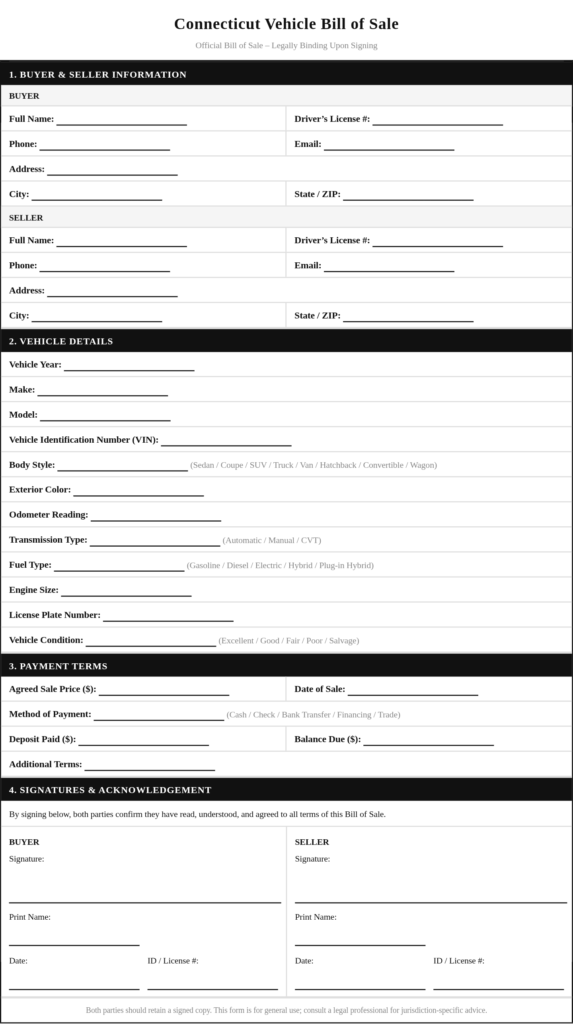
A Connecticut Vehicle Bill of Sale is a legal document that records the transfer of ownership when buying or selling a car, truck, motorcycle, or other motor vehicle in the state. This purchase agreement provides essential proof that the sale took place, listing details like the vehicle identification number, sale price, odometer reading, and the names of both the buyer and seller. It protects both parties by creating an official record of the transaction.
While Connecticut law does not always require a bill of sale form for every vehicle transfer, having a signed copy is highly recommended for your records. This sale agreement can help resolve disputes, prove the purchase price for tax purposes, and serve as documentation when registering the vehicle with the Connecticut DMV. Whether you’re completing an as-is sale or a financed purchase, a properly executed bill of sale safeguards your interests throughout the transaction.
Free Printable Connecticut Vehicle Bill of Sale Template [Editable]
Benefits of Connecticut Vehicle Sale Agreement
- Provides legal proof of ownership transfer recognized by the Connecticut Department of Motor Vehicles when registering your newly purchased vehicle
- Documents the exact sale price, which helps establish the correct sales tax amount owed to Connecticut tax authorities and prevents overpayment
- Protects sellers from future liability by clearly showing they no longer own the vehicle as of the specified sale date, important under Connecticut's vehicle liability laws
- Creates a detailed purchase record including the VIN, odometer reading, and vehicle condition, helping buyers verify accuracy during Connecticut DMV registration
- Serves as essential documentation for as-is sales in Connecticut, clarifying that the buyer accepts the vehicle in its current condition without warranties
- Facilitates smoother transactions between private parties by establishing clear terms both the buyer and seller agree to, reducing potential disputes under Connecticut contract law
What type of Vehicle can it be used for?
This Connecticut Vehicle Bill of Sale can be used for the private sale or purchase of cars, trucks, SUVs, vans, motorcycles, trailers, RVs, motorhomes, and other motor vehicles registered through the Connecticut DMV. Whether you're buying a used sedan from a neighbor or selling your pickup truck to a private party, this sale agreement form documents the transaction. It works for both running vehicles and non-operational projects being sold as-is.
Mistakes you should avoid while signing a Connecticut Vehicle Bill of Sale
- Forgetting to record the correct vehicle identification number (VIN), which must match the title and is required for Connecticut DMV registration
- Leaving the odometer reading blank or recording it inaccurately, as federal and Connecticut law require accurate mileage disclosure for most vehicles
- Not including a clear statement about the vehicle's condition or whether it's being sold as-is, which can lead to disputes after the sale
- Failing to have both the buyer and seller sign and date the bill of sale form, making it invalid as proof of the transaction
- Not keeping a signed copy for your personal records, which you may need for tax purposes or if questions arise about the sale
- Listing an incorrect sale price or leaving it blank, which can cause problems when calculating sales tax owed to Connecticut or during title transfer
Required Documents for Connecticut Vehicle Sale Agreement
- Connecticut Certificate of Title properly signed by the seller in the designated assignment section, showing the legal transfer of ownership
- Valid government-issued photo identification for both the buyer and seller to verify identities during the transaction
- Completed Connecticut Vehicle Bill of Sale form with all required information including VIN, sale price, date, and signatures from both parties
- Odometer Disclosure Statement, which may be included on the title or bill of sale, documenting the vehicle's current mileage as required by law
- Connecticut Form H-6 (Sales and Use Tax Return) if applicable, needed when registering the vehicle with the Connecticut DMV
- Vehicle history report or inspection records if available, providing the buyer with documentation of the vehicle's condition and maintenance history
Frequently Asked Questions
Does Connecticut require a bill of sale for vehicle sales?
Connecticut does not legally require a bill of sale for all vehicle transactions, but it is strongly recommended. The Connecticut DMV primarily requires the certificate of title to transfer ownership. However, a bill of sale form serves as valuable proof of the transaction details, purchase price for tax purposes, and protection for both buyer and seller.
Does a Connecticut Vehicle Bill of Sale need to be notarized?
No, Connecticut does not require a vehicle bill of sale to be notarized to be valid. However, both the buyer and seller must sign and date the document. While notarization is optional, some parties choose to have it notarized for extra authentication and peace of mind during high-value transactions.
What information must be included on a Connecticut Vehicle Bill of Sale?
A complete Connecticut bill of sale should include the full names and addresses of both buyer and seller, the date of sale, the purchase price, and detailed vehicle information including the make, model, year, and vehicle identification number (VIN). It should also include the odometer reading and a statement of the vehicle's condition, especially if it's an as-is sale.
How does a bill of sale help when registering a vehicle in Connecticut?
When you register your newly purchased vehicle with the Connecticut DMV, the bill of sale serves as proof of the purchase price, which helps determine the sales tax you owe. It also provides a backup record of the transaction date and vehicle details. While the title is the primary document needed, having a signed bill of sale strengthens your documentation package.
Can I use a handwritten bill of sale for a vehicle in Connecticut?
Yes, a handwritten bill of sale is acceptable in Connecticut as long as it includes all necessary information and is signed by both parties. However, using a printed bill of sale form ensures you don't accidentally omit important details like the VIN, odometer reading, or sale date. A clear, complete document protects both the buyer and seller in case questions arise later.
Conclusion
Having a properly completed bill of sale form protects you whether you're buying or selling a vehicle in Connecticut. This legal document creates a clear purchase record that shows the transfer of ownership, sale price, and vehicle condition. Keep a signed copy for your files along with the title and other paperwork. It will prove invaluable if any questions come up later.
Before heading to the Connecticut DMV to register your newly purchased vehicle, make sure your sale agreement includes all required details. Double check that the vehicle identification number matches the title and that both parties have signed the document. This simple step ensures a smooth ownership transfer and helps you avoid delays or complications during the registration process.