![Free Printable Editable Bill of Sale Form Template [PDF, WORD]](https://billofsale.authorizationletter.org/wp-content/uploads/2026/06/billofsale_logo-206x48.png)
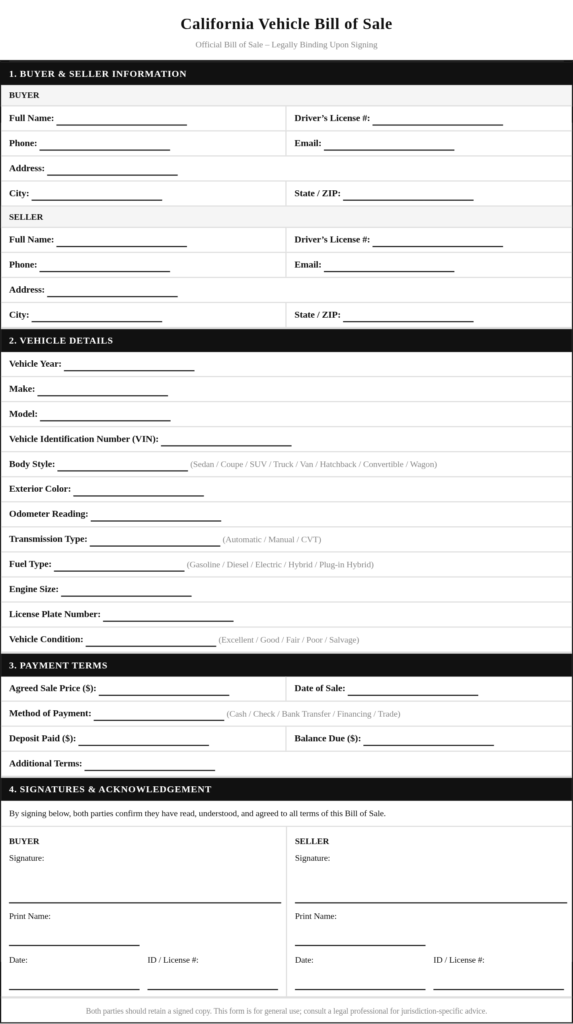
A California Vehicle Bill of Sale is a legal document that records the transfer of ownership when someone buys or sells a car, truck, motorcycle, or other motor vehicle in the state. This purchase agreement serves as proof that the transaction took place and includes important details like the sale price, vehicle identification number (VIN), odometer reading, and the names of both the buyer and seller. While California doesn’t always require this form to be filed with the DMV, having a signed copy protects both parties and creates a clear purchase record.
This bill of sale form acts as your receipt and provides documentation if any disputes arise later. Whether you’re selling a used car in Los Angeles or buying a motorcycle in San Diego, this simple document helps ensure the transfer of ownership goes smoothly and gives you written proof of the vehicle’s condition at the time of sale.
Free Printable California Vehicle Bill of Sale Template [Editable]
Benefits of California Vehicle Sale Agreement
- Provides legal protection for both buyer and seller under California state law, creating a binding sale agreement that documents the exact terms of the transaction
- Serves as essential proof of purchase price for California DMV registration and helps calculate the correct use tax owed to the state
- Creates a permanent purchase record showing the vehicle's odometer reading at time of sale, which is required under California's odometer disclosure laws
- Protects sellers from liability after the sale by documenting when ownership transferred and establishing an as-is sale condition if applicable
- Helps California buyers verify vehicle history and ownership chain when applying for title transfer at their local DMV office
- Simplifies tax filing and accounting by providing a clear legal document showing the vehicle purchase date and amount paid
What type of Vehicle can it be used for?
This California Vehicle Bill of Sale can be used for selling or buying any type of motor vehicle registered in the state. This includes passenger cars, pickup trucks, SUVs, vans, motorcycles, scooters, recreational vehicles (RVs), trailers, boats with motors, and even all-terrain vehicles (ATVs). Whether you're completing a private party sale or transferring a vehicle between family members, this form documents the transaction properly.
Mistakes you should avoid while signing a California Vehicle Bill of Sale
- Forgetting to include the complete 17-digit vehicle identification number (VIN), which California DMV requires to process the title transfer
- Leaving the odometer reading blank or recording it incorrectly, as accurate mileage disclosure is mandatory under California law for most vehicles
- Not having both buyer and seller sign and date the form on the same day as the actual vehicle transfer takes place
- Failing to provide a signed copy to both parties, which leaves one person without proof of the transaction if problems arise later
- Writing 'gift' or '$0' as the sale price when money actually changed hands, which can create tax issues with the California DMV
- Neglecting to clearly state 'as-is' condition if applicable, which may affect the seller's legal liability for vehicle defects discovered after the sale
Required Documents for California Vehicle Sale Agreement
- Valid California Certificate of Title signed by the seller in the appropriate section to legally transfer ownership
- Completed California Vehicle Bill of Sale form with all required fields filled in, including VIN, odometer reading, and sale price
- Current vehicle registration card or California DMV registration renewal notice showing the vehicle is properly registered
- California Smog Certification (if the vehicle is more than four model years old), as most counties require passing smog inspection before transfer
- REG 262 form (Vehicle/Vessel Transfer and Reassignment) if applicable, particularly when the seller still has a lien or the title was recently transferred
- Valid government-issued photo identification for both buyer and seller to verify identities during the transaction
Frequently Asked Questions
Do I need to notarize a Vehicle Bill of Sale in California?
No, California does not require a Vehicle Bill of Sale to be notarized. However, both the buyer and seller must sign the document for it to be valid as a legal record of the transaction. Some people choose to have it notarized anyway for extra protection, but it's not mandatory under state law.
Where do I submit my California Vehicle Bill of Sale?
You don't typically submit the bill of sale form to the California DMV, as it's primarily for your personal records. However, you should keep a signed copy for your files as proof of the purchase price and transaction details. The buyer will need it when registering the vehicle and calculating use tax owed to the state.
How much does a California Vehicle Bill of Sale cost?
The bill of sale document itself is free to create and sign between buyer and seller. There are no state fees for the form. However, the buyer will need to pay DMV title transfer fees, registration fees, and use tax based on the purchase price when they register the vehicle in their name.
Can I use a bill of sale instead of a title in California?
No, a bill of sale cannot replace the Certificate of Title in California. You need both documents to properly transfer vehicle ownership. The title proves legal ownership and must be signed over by the seller, while the bill of sale serves as a receipt and purchase record for the transaction.
What should I do if I lost my Vehicle Bill of Sale?
If you lose your bill of sale, contact the other party to see if they can provide a copy of the signed document. If that's not possible, you can create a new one with the same information and have both parties sign it again. Keep multiple copies in the future to avoid this issue.
Conclusion
Getting a proper bill of sale form when buying or selling a vehicle in California protects everyone involved in the transaction. This simple legal document creates a clear purchase record and helps with title transfer at the California DMV. Make sure both parties keep a signed copy for their records.
Whether you're completing an as-is sale or buying from a private seller, having this sale agreement in writing prevents misunderstandings down the road. Take a few minutes to fill out the form completely and accurately. It's a small step that provides important legal protection and peace of mind for your vehicle purchase or sale.