![Free Printable Editable Bill of Sale Form Template [PDF, WORD]](https://billofsale.authorizationletter.org/wp-content/uploads/2026/06/billofsale_logo-206x48.png)
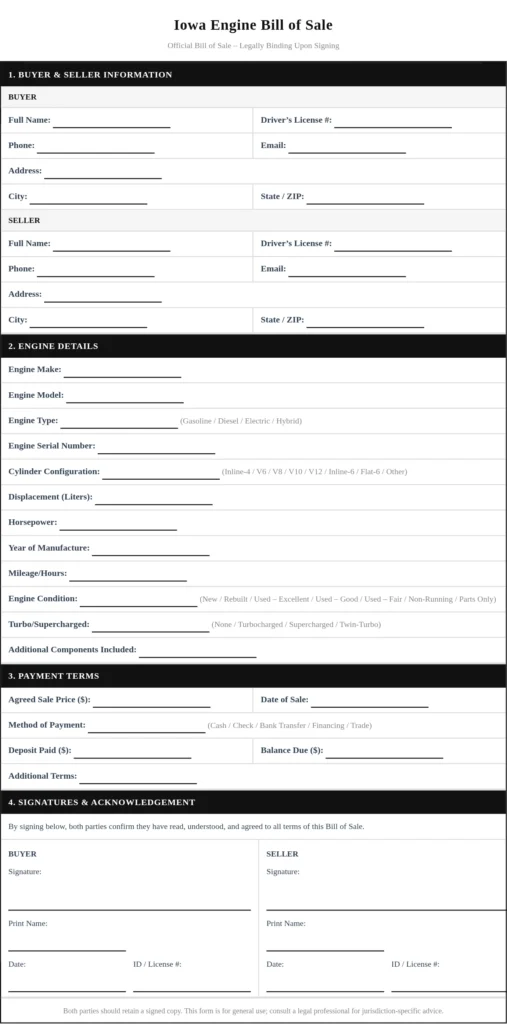
A Iowa Engine Bill of Sale is a legal document that records the transfer of ownership when someone buys or sells an engine in Iowa. This sale agreement provides written proof of the transaction, including details like the engine specifications, sale price, and the names of both the buyer and seller. Whether you’re purchasing a replacement motor for your truck or selling a vintage engine from your collection, having a proper bill of sale form protects everyone involved.
In Iowa, this purchase agreement serves as your official purchase record and can be crucial for tax purposes, registration, or future resale. The document establishes a clear chain of ownership and helps prevent disputes down the road. While Iowa law doesn’t always require a bill of sale for engine transactions, creating one is a smart practice that gives both parties peace of mind and legal protection.
Free Printable Iowa Engine Bill of Sale Template [Editable]
Benefits of Iowa Engine Sale Agreement
- Provides legal proof of purchase that Iowa buyers can use to demonstrate lawful ownership of the engine if questions arise later
- Documents the sale price and transaction date, which helps Iowa residents accurately report taxes and comply with state record-keeping requirements
- Protects Iowa sellers from liability by clearly stating the engine is sold in as-is condition, limiting future claims after the transfer of ownership is complete
- Creates a detailed purchase record including engine serial numbers and specifications that can help with insurance claims or warranty issues in Iowa
- Establishes a paper trail that Iowa law enforcement and the Iowa DMV recognize as valid proof when verifying ownership of automotive parts
- Helps Iowa buyers and sellers avoid misunderstandings by clearly documenting all agreed-upon terms, conditions, and the physical condition of the engine at the time of sale
What type of Engine can it be used for?
This Iowa Engine Bill of Sale can be used for any type of engine transaction in the state, including car engines, truck motors, motorcycle engines, boat motors, ATV and UTV power plants, farm equipment engines, and industrial or commercial motors. Whether you're dealing with a rebuilt engine, a used motor pulled from a salvage vehicle, or a brand-new crate engine, this sale agreement provides the documentation you need to complete the transfer of ownership properly.
Mistakes you should avoid while signing a Iowa Engine Bill of Sale
- Forgetting to include the engine serial number or VIN-derivative markings, which makes it nearly impossible to identify the specific motor if disputes or legal issues arise later
- Leaving the purchase price blank or writing 'various' instead of the actual dollar amount, which can create tax complications and makes the document less credible
- Failing to have both the buyer and seller sign the bill of sale form on the same day as the transaction, creating confusion about when ownership actually transferred
- Not keeping a signed copy of the bill of sale for your personal records, which leaves you without proof if the other party loses their copy or disputes the terms
- Using vague language to describe the engine condition instead of being specific about known defects, which can lead to disagreements about whether it was truly an as-is sale
- Skipping important details like the make, model, and year the engine came from, making it difficult to verify the engine's history or prove its value
Required Documents for Iowa Engine Sale Agreement
- Valid government-issued photo identification from both the buyer and seller, such as an Iowa driver's license or state ID card
- The completed Iowa Engine Bill of Sale form with all required fields filled out, including engine specifications and serial numbers
- Any existing documentation showing the seller's ownership of the engine, such as a previous bill of sale, purchase receipt, or vehicle title if the engine is still in a vehicle
- Proof of payment such as a receipt, canceled check, or bank transfer record showing the agreed-upon purchase price was paid
- Engine specifications or manufacturer documentation that verifies the make, model, and serial number of the motor being sold
- Odometer disclosure or engine hour meter reading if applicable, along with any service records or vehicle history that came with the engine
Frequently Asked Questions
Do I need to notarize my Iowa Engine Bill of Sale?
Iowa does not require engine bills of sale to be notarized, but having the document notarized adds an extra layer of legal protection and authenticity. If you're dealing with a high-value engine or want additional security, getting it notarized is a smart choice. Many buyers and sellers choose notarization to prevent anyone from later claiming the signatures are invalid.
Can I use a handwritten bill of sale for an engine transaction in Iowa?
Yes, a handwritten bill of sale is legally valid in Iowa as long as it includes all the essential information like buyer and seller details, engine description, sale price, and signatures. However, using a printed bill of sale form is recommended because it ensures you don't accidentally leave out important details. A clear, complete document protects both parties better than a hastily written note.
What happens if I buy an engine in Iowa without getting a bill of sale?
Without a bill of sale, you have no official purchase record proving you legally own the engine, which can cause serious problems if ownership is ever questioned. You may struggle to resell the engine later, face challenges with insurance claims, or even have law enforcement question whether the engine was obtained legally. Always insist on a proper sale agreement to protect yourself.
Does the Iowa DMV need to see my Engine Bill of Sale?
The Iowa DMV typically doesn't require an engine bill of sale unless you're registering a vehicle that had an engine replacement or dealing with a title issue. However, keeping your bill of sale with your vehicle records is wise because the DMV or law enforcement may request it if questions arise about the vehicle's history. It serves as important supporting documentation for your ownership records.
Should I include an 'as-is' statement in my Iowa Engine Bill of Sale?
Including an as-is clause is highly recommended for Iowa engine sales because it protects the seller from future warranty claims or complaints about the engine's condition. This statement makes it clear the buyer accepts the engine in its current state with any existing defects. Both parties should understand and agree to this term before signing the legal document.
Conclusion
Creating a proper bill of sale form when buying or selling an engine in Iowa takes just a few minutes but provides lasting legal protection. This simple purchase agreement documents the transfer of ownership and gives both parties a signed copy they can refer to if questions come up later. Make sure you fill out every section completely and keep your purchase record in a safe place.
Whether you're handling an as-is sale or transferring a rebuilt motor, having the right legal document makes the process smoother for everyone. Take the time to create a detailed sale agreement that includes all the engine specifications and transaction terms. This small step protects your investment and ensures your engine transaction is properly documented according to Iowa standards.