![Free Printable Editable Bill of Sale Form Template [PDF, WORD]](https://billofsale.authorizationletter.org/wp-content/uploads/2026/06/billofsale_logo-206x48.png)
A Delaware Vehicle Bill of Sale is a legal document that records the transfer of ownership when a motor vehicle changes hands between a buyer and seller. This essential purchase agreement captures important details like the vehicle identification number (VIN), sale price, odometer reading, and the names and addresses of both parties involved in the transaction. It serves as your official purchase record and protects both the buyer and seller during the transfer process.
In Delaware, while the Division of Motor Vehicles (DMV) doesn’t require a bill of sale for most standard vehicle transfers, having a signed copy provides crucial protection for both parties. This sale agreement becomes especially important when registering the vehicle, proving the purchase price for tax purposes, or resolving any disputes that might arise after the sale. Whether you’re buying or selling a car, truck, motorcycle, or trailer, a properly completed bill of sale form creates a clear paper trail of the transaction.
Free Printable Delaware Vehicle Bill of Sale Template [Editable]
Benefits of Delaware Vehicle Sale Agreement
- Provides legal proof of the purchase price, which helps you calculate and verify the required Delaware documentary fee and title transfer taxes when registering with the Delaware DMV
- Protects sellers from future liability by documenting the exact date and time ownership transferred, which is crucial under Delaware law if the vehicle is involved in incidents after the sale
- Creates an official record for as-is sales, clearly stating the vehicle's condition at the time of transfer and limiting your exposure to future disputes about mechanical issues
- Serves as required documentation when the Delaware title is lost or unavailable, helping facilitate a smoother registration process at the DMV
- Establishes a verifiable chain of ownership that's particularly valuable when selling older vehicles or those with reconstructed titles common in Delaware
- Helps buyers demonstrate legitimate ownership if questions arise during the Delaware title application process or when obtaining vehicle insurance coverage
What type of Vehicle can it be used for?
This Delaware Vehicle Bill of Sale can be used for a wide variety of motor vehicles including cars, trucks, SUVs, motorcycles, mopeds, scooters, recreational vehicles (RVs), trailers, campers, and ATVs. Whether you're conducting a private sale of a daily driver or transferring ownership of a vintage automobile, this form works for both new and used vehicles. The document is suitable for any motorized vehicle transaction between private parties in Delaware, regardless of the vehicle's age, make, or model.
Mistakes you should avoid while signing a Delaware Vehicle Bill of Sale
- Forgetting to include the complete 17-digit vehicle identification number (VIN), which can cause major delays when the buyer tries to register the vehicle with the Delaware DMV
- Leaving the odometer reading blank or recording it incorrectly, as federal law requires accurate mileage disclosure for most vehicles under 10 years old
- Not having both parties sign and date the document on the same day as the actual exchange of money and vehicle, creating potential legal complications about when ownership truly transferred
- Failing to specify whether the sale is 'as-is' or includes any warranties, which can lead to misunderstandings about the seller's responsibilities after the transaction
- Writing unclear or rounded purchase prices that don't match the actual amount exchanged, potentially causing issues with Delaware tax calculations or future resale value documentation
- Not keeping a signed copy for your own records, which leaves you without proof of the transaction if disputes arise or you need documentation for tax or legal purposes
Required Documents for Delaware Vehicle Sale Agreement
- Valid government-issued photo identification (driver's license or state ID) from both the buyer and seller to verify identities during the transaction
- Current Delaware Certificate of Title signed by the seller in the proper assignment section, showing a clear chain of ownership
- Odometer Disclosure Statement, which is typically included on the Delaware title itself for vehicles under 10 years old
- Lien release documentation from any lienholder if the vehicle has an outstanding loan that's been paid off prior to sale
- Vehicle history report (optional but recommended) showing the vehicle's accident history, prior ownership, and title status to ensure transparency
- Completed Form MV-1 (Application for Certificate of Title) that the buyer will submit to the Delaware DMV along with the bill of sale and other transfer documents
Frequently Asked Questions
Does Delaware require a bill of sale to transfer a vehicle?
Delaware doesn't legally require a bill of sale for standard vehicle transfers since the title itself serves as the primary transfer document. However, the Delaware DMV strongly recommends using a bill of sale as it provides important legal protection and creates a clear purchase record for both parties. It's especially helpful when the title is delayed or if you need to prove the purchase price for tax purposes.
Does a Delaware Vehicle Bill of Sale need to be notarized?
No, Delaware does not require a vehicle bill of sale to be notarized to be legally valid. While notarization adds an extra layer of authentication and can be helpful in preventing fraud, a signed copy from both the buyer and seller is sufficient. However, the Delaware title itself must be properly signed and may require notarization depending on when it was issued.
What information must be included on a Delaware Vehicle Bill of Sale?
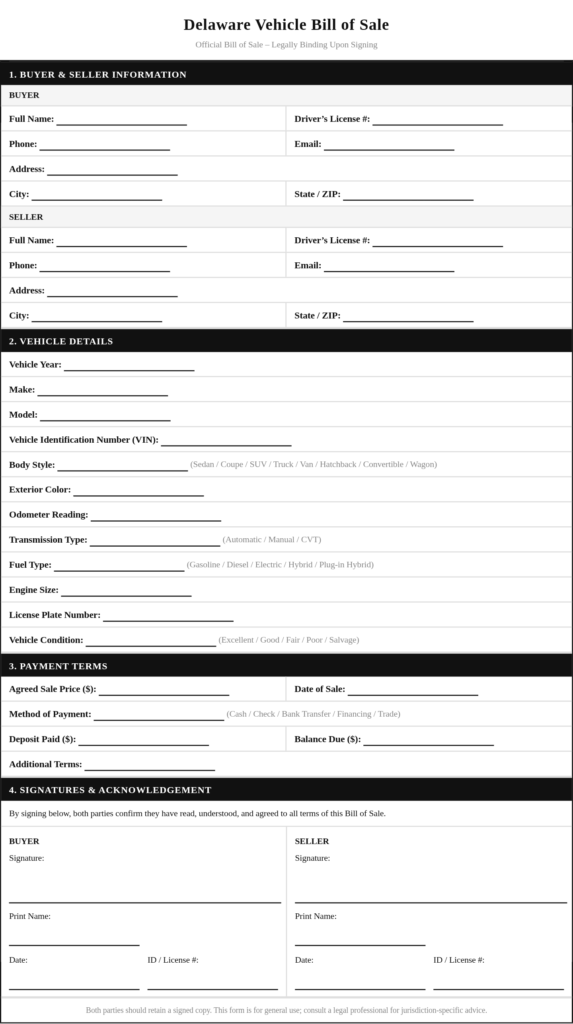
A complete Delaware vehicle sale agreement should include the full legal names and addresses of both parties, a detailed vehicle description with the VIN, make, model, year, and odometer reading, the purchase price, sale date, and signatures from both buyer and seller. You should also indicate whether the sale is as-is or includes any warranties. Including the vehicle's title number adds another layer of documentation that helps during the DMV registration process.
Can I use a Delaware Bill of Sale for a vehicle purchased out of state?
Yes, you can use a Delaware bill of sale form when purchasing a vehicle from another state and bringing it into Delaware for registration. The Delaware DMV will accept a properly completed bill of sale along with the out-of-state title as part of your registration package. This legal document helps establish the purchase price and date of sale, which are needed to calculate Delaware's documentary fee and title taxes.
How does an as-is sale work on a Delaware Vehicle Bill of Sale?
An as-is sale means the seller is transferring the vehicle in its current condition with no guarantees or warranties about its mechanical state or future performance. By clearly marking the sale as-is on your bill of sale form, Delaware sellers protect themselves from future claims about vehicle problems that weren't disclosed. Buyers should always inspect vehicles carefully and consider getting a pre-purchase inspection before agreeing to an as-is purchase agreement.
Conclusion
A Delaware Vehicle Bill of Sale is a smart way to protect yourself during any private vehicle transaction. This simple legal document creates a clear purchase record that both parties can refer to if questions come up later. Having a properly completed sale agreement makes the transfer of ownership smoother and gives you peace of mind.
Keep your signed copy in a safe place along with other important vehicle paperwork. Whether you're the buyer heading to the Delaware DMV to register your new vehicle or the seller who wants proof the transaction is complete, this bill of sale form serves as your official record. Taking a few minutes to fill out this purchase agreement correctly can save you from headaches down the road.