![Free Printable Editable Bill of Sale Form Template [PDF, WORD]](https://billofsale.authorizationletter.org/wp-content/uploads/2026/06/billofsale_logo-206x48.png)
A written agreement can help make any property transaction more organized and secure. A Nebraska Bill of Sale serves as proof that a sale has taken place and documents important information about the buyer, seller, and property involved. This form helps create a clear history of ownership transfer and can support future registration or record-keeping needs. Having all transaction details properly documented can help prevent misunderstandings and provide peace of mind for everyone involved.
Download Free Printable Nebraska Bill of Sale Template
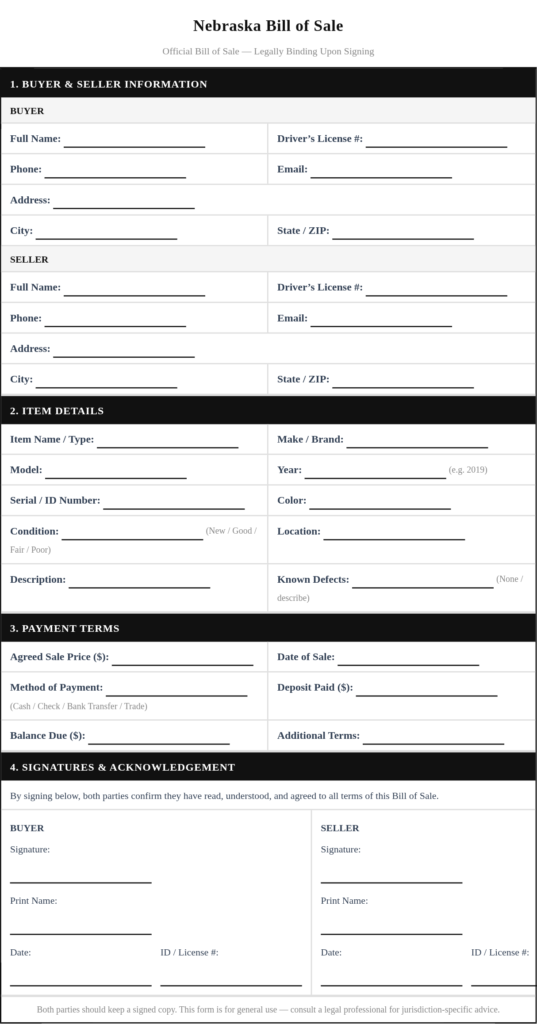 What Is a Nebraska Bill of Sale?
A Nebraska Bill of Sale is a legal document that records the transfer of ownership for personal property between a buyer and a seller. This written purchase record provides proof that a sale took place, documents the sale price, and confirms both parties agreed to the transaction. You need this form to protect yourself during a private sale, establish a clear property transfer, and meet Nebraska sale requirements for items like vehicles, boats, firearms, and other valuable goods. The signed copy serves as your purchase agreement and helps resolve disputes.
Documents required in Nebraska Bill of Sale
- Valid Government-Issued Photo ID
- Buyer and Seller Contact Information
- Description of Property Being Sold
- Ownership Records
- Signed Bill of Sale Form
Information Included in a Nebraska Sale Agreement
- Buyer and Seller Identification Information
- Description of the Property
- Sale Price and Payment Method
- Date of Transfer
- Signatures of Both Parties.
How to Complete a Nebraska Bill of Sale Form
- Identify the type of property you are selling and download the appropriate bill of sale form for your transaction. Different items may require specific information, so choose the correct template.
- Fill in the complete names, addresses, and contact information for both the buyer and the seller. Accurate details make the legal document enforceable and easy to verify later.
- Describe the personal property being sold in detail, including make, model, year, serial number, VIN, or other identifying features. Specific descriptions prevent confusion about what changed hands.
- Write the sale price clearly, including both the numeric amount and the words spelling it out. If the item is a gift, indicate zero dollars or mark it as a gift.
- State the date of the sale and confirm that the seller transfers full ownership to the buyer with no outstanding liens or claims. This creates a legally binding agreement.
- Have both the buyer and seller sign and date the purchase agreement in the presence of each other. Each party should keep a signed copy for their records.
- Complete any additional steps required by Nebraska law, such as vehicle title transfer or registration, to finalize the property transfer.
How to Notarize a NE Bill of Sale
- Check whether your specific sale requires notarization under Nebraska bill of sale laws. Most personal property sales do not require a notarized document, but vehicles and certain high-value items may benefit from notarization for added legal protection.
- Bring the completed bill of sale form, valid photo identification for both the buyer and seller, and any supporting documents related to the sale. Do not sign the form before appearing in front of the notary.
- Locate a notary public at your bank, post office, law office, or through a mobile notary service. Many notaries charge a small fee for their services.
- Sign the sale agreement in the presence of the notary public. The notary will verify your identities, watch you sign, and then stamp and sign the document to certify its authenticity.
- Obtain copies of the notarized document for both parties. The notary seal makes the purchase record more credible and harder to dispute in court if questions arise later.
FAQs
Q. Does a Nebraska Bill of Sale make my transaction legally binding?
Yes, a properly completed bill of sale form creates a legally binding contract between the buyer and seller. The document proves that both parties agreed to the sale price and terms. Keep your signed copy to protect your rights if any disputes occur.
Q. Do I need to notarize my Nebraska Bill of Sale?
Nebraska does not require notarization for most bill of sale transactions. However, getting a notarized document adds an extra layer of legal protection and authenticity. Some buyers or lenders may request notarization even when the state does not require it.
Q. How many copies of the bill of sale should I keep?
Both the buyer and the seller should keep a signed copy of the purchase agreement for their personal records. Make at least two original signed copies during the sale. Store your copy in a safe place with other important property transfer documents.
Q. What information must appear on a Nebraska Bill of Sale?
Your legal document must include the full names and addresses of both parties, a detailed description of the personal property, the sale price, and the date of sale. Both the buyer and seller must sign the form. Additional requirements may apply depending on the type of property being sold.
Q. Can I use a Bill of Sale for a vehicle in Nebraska?
Yes, you can use a bill of sale form to document a vehicle purchase in a private sale. Nebraska requires additional paperwork like a title transfer to complete vehicle registration. The purchase record helps prove the sale price for tax purposes and establishes the chain of ownership.
Conclusion
Completing a Nebraska Bill of Sale protects both parties during any private sale of personal property. This simple legal document establishes a clear record of the transaction, proves the transfer of ownership, and helps prevent future disputes. Whether you are buying or selling a vehicle, boat, firearm, or other valuable item, a properly executed sale agreement gives you peace of mind and legal protection.
Take the time to fill out your bill of sale form completely and accurately. Include all required details, ensure both the buyer and seller sign the purchase agreement, and keep your signed copy in a safe place. Following Nebraska sale requirements and documenting your transaction properly makes the entire process smoother and protects your interests for years to come.