![Free Printable Editable Bill of Sale Form Template [PDF, WORD]](https://billofsale.authorizationletter.org/wp-content/uploads/2026/06/billofsale_logo-206x48.png)
A properly documented transaction can offer valuable protection to everyone involved. A Virginia Bill of Sale serves as a written agreement that confirms the transfer of ownership from the seller to the buyer. This document records essential information about the sale and can be used as proof of purchase when needed. Whether the transaction involves a vehicle or other personal property, maintaining accurate documentation helps support future verification and ensures that important details are preserved.
Download Free Printable Virginia Bill of Sale Template
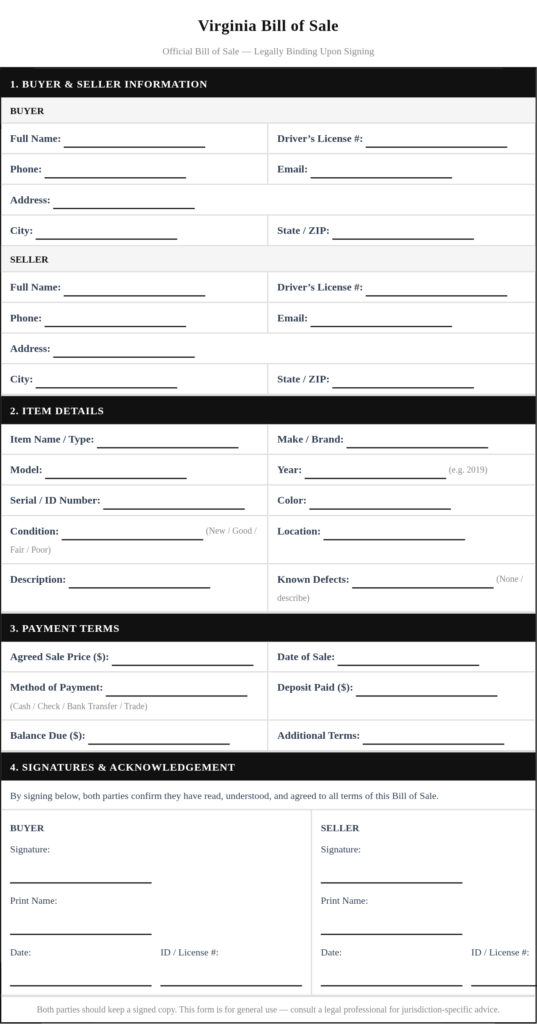 What Is a Virginia Bill of Sale?
A Virginia Bill of Sale is a legal document that records the transfer of ownership for personal property from a seller to a buyer. This purchase record establishes proof that a sale took place, lists the sale price, and describes the item being sold. Whether you are completing a private sale of a vehicle, boat, or other valuable property, a signed copy of this bill of sale form protects both parties by creating a legally binding purchase agreement. Virginia bill of sale laws encourage creating this purchase record to document the property transfer clearly and avoid future disputes.
Documents required in Virginia Bill of Sale
- Government-Issued Photo Identification
- Buyer and Seller Contact Information
- Description of Property Being Sold
- Ownership Verification Documents
- Signed Bill of Sale Form
Information Included in a Virginia Sale Agreement
- Buyer's Full Name and Contact Details
- Seller's Full Name and Contact Details
- Property Description and Condition
- Agreed Purchase Price
- Transaction Date and Signatures.
How to Complete a Virginia Bill of Sale Form
- Write the full legal names and current addresses of both the buyer and the seller at the top of the bill of sale form. Include contact information like phone numbers or email addresses to make future communication easier.
- Describe the personal property being sold in detail, including make, model, serial number, VIN, year, color, and any identifying features. The more specific you are, the better the legal document protects both parties.
- Enter the complete sale price in both numbers and words to prevent any confusion or alteration. If the item is a gift, write zero dollars or note that no money changed hands.
- State whether the property is sold as-is or with warranties, and disclose any known defects or issues. This transparency helps avoid legal problems after the property transfer.
- Include the date and location where the sale agreement takes place. Both the buyer and seller must sign and print their names to make the purchase agreement official.
- Make copies of the signed bill of sale for both parties to keep as a permanent purchase record. Each party should store their signed copy in a safe place with other important documents.
- If selling a vehicle, the seller should also complete the title transfer and both parties should notify the Virginia Department of Motor Vehicles within the required timeframe.
How to Notarize a VA Bill of Sale
- Understand that Virginia does not require a bill of sale to be notarized for most personal property transactions, but getting a notarized document adds an extra layer of legal protection. Notarization helps prove the signatures are authentic and the sale agreement is legitimate.
- Bring valid government-issued photo identification such as a driver's license or passport when you meet the notary public. Both the buyer and seller should appear in person if both signatures need notarization.
- Sign the bill of sale form in front of the notary public, not before you arrive. The notary must witness you signing the legal document to complete the notarization process properly.
- Pay the notary fee, which typically ranges from five to fifteen dollars in Virginia. Some banks offer free notary services to account holders, so check with your financial institution first.
- Receive the notarized document with the official seal and signature of the notary public. This legally binding record now carries additional credibility if you ever need to prove the transfer of ownership in court or to a government agency.
FAQs
Q. Is a bill of sale legally valid in Virginia without notarization?
Yes, a bill of sale form is legally binding in Virginia even without notarization as long as both parties sign it. The signed copy serves as proof of the purchase agreement and transfer of ownership. Adding a notarized document simply provides extra verification but is not required by Virginia sale requirements.
Q. Do I need to notarize my Virginia bill of sale for a vehicle?
Virginia does not require notarization for a vehicle bill of sale, but many buyers and sellers choose to notarize it for added security. A notarized document helps prevent fraud and confirms that both parties willingly entered the sale agreement. Check with your local DMV for any specific requirements related to your vehicle type.
Q. How many copies of the bill of sale should I keep?
Both the buyer and the seller should keep a signed copy of the bill of sale for their personal records. This purchase record proves the property transfer occurred and documents the sale price. Store your copy with other important legal documents in case you need it for tax purposes or future disputes.
Q. What information must be included on a Virginia bill of sale?
A complete bill of sale form must include the names and addresses of the buyer and seller, a detailed description of the personal property, and the sale price. You should also include the date of sale and signatures from both parties to make it a legally binding legal document. For vehicles, include the VIN, make, model, year, and odometer reading.
Q. Can a buyer return an item after signing a bill of sale?
Once both parties sign a bill of sale, the purchase agreement is legally binding and the buyer generally cannot return the item unless the seller agrees. If the sale was as-is, the buyer accepts the property in its current condition. The seller has no obligation to accept returns in a private sale unless fraud or misrepresentation occurred.
Conclusion
Creating a Virginia Bill of Sale protects both buyers and sellers by documenting the details of any personal property transaction. This legal document serves as a permanent purchase record that proves the transfer of ownership took place, lists the sale price, and describes the property in detail. Whether you are buying or selling a car, boat, furniture, or other valuable items, a signed bill of sale form gives you legal proof of the sale agreement.
Virginia bill of sale laws do not require notarization for most transactions, but having a notarized document adds credibility and security. Both parties should keep a signed copy for their records in case questions arise later. Taking a few minutes to complete this purchase agreement correctly can save you from confusion, disputes, or legal trouble down the road. A properly prepared bill of sale makes private sales smoother and gives everyone peace of mind that the property transfer was handled legally and professionally.