![Free Printable Editable Bill of Sale Form Template [PDF, WORD]](https://billofsale.authorizationletter.org/wp-content/uploads/2026/06/billofsale_logo-206x48.png)
Clear documentation can make a property sale easier to manage and verify in the future. A West Virginia Bill of Sale provides written proof that ownership has been transferred and outlines the terms agreed upon by the buyer and seller. This document can help establish a reliable record of the transaction and support ownership verification when needed. By keeping all important details organized in one place, both parties can reduce misunderstandings and maintain confidence in the completed sale.
Download Free Printable West Virginia Bill of Sale Template
 What Is a West Virginia Bill of Sale?
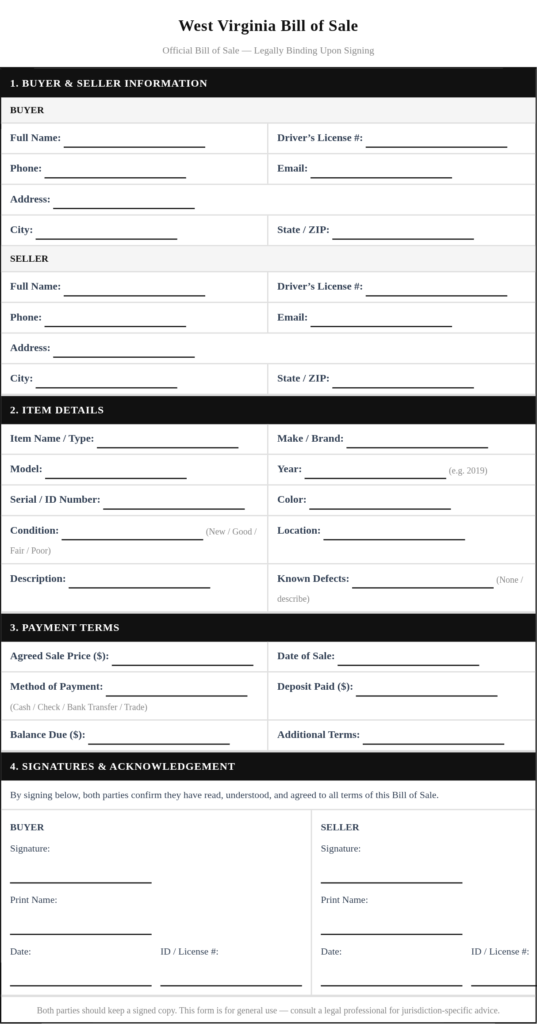
A West Virginia Bill of Sale is a legal document that records the transfer of ownership for personal property from a seller to a buyer. This written purchase record confirms the sale price, describes the item sold, and identifies both parties involved in the transaction. The bill of sale form serves as proof of the purchase agreement and protects both buyer and seller in private sales. Whether you're selling a vehicle, boat, firearm, or other valuable items, this legally binding document establishes a clear property transfer and can help resolve future disputes.
Documents required in West Virginia Bill of Sale
- Government-Issued Identification
- Buyer and Seller Contact Details
- Property Description
- Supporting Ownership Documentation
- Signed Bill of Sale Form
Information Included in a West Virginia Sale Agreement
- Names and Addresses of Buyer and Seller
- Property Details and Description
- Purchase Price
- Date of Ownership Transfer
- Signatures of Both Parties.
How to Complete a West Virginia Bill of Sale Form
- Identify the type of property being sold and download the appropriate West Virginia bill of sale form for that item. Different forms exist for vehicles, boats, firearms, and general personal property.
- Fill in the complete legal names and current addresses of both the buyer and seller. Include phone numbers and email addresses when possible for clear contact information.
- Describe the item being sold with specific details such as make, model, year, serial number, VIN, or other identifying characteristics. The more detailed the description, the better the purchase record.
- Write the exact sale price in both numbers and words to avoid confusion. If the item is a gift, write 'gift' or zero dollars where the price appears.
- Include the date of sale and the location where the transaction takes place. This establishes when the transfer of ownership officially occurred.
- Have both the buyer and seller review the entire sale agreement carefully before signing. Each party should initial any corrections or changes made to the document.
- Collect signatures from both parties in the designated areas. Keep a signed copy for your personal records and provide the other party with their copy of this legally binding document.
How to Notarize a WV Bill of Sale
- Check whether your specific transaction requires notarization under West Virginia bill of sale laws. Vehicle sales in West Virginia typically require notarization, while many other personal property transfers do not.
- Bring valid government-issued photo identification such as a driver's license or passport to the notary appointment. Both the buyer and seller must appear in person if both signatures need notarization.
- Locate a licensed notary public at banks, courthouses, shipping stores, or online notary services. Many notaries charge a small fee for their services, typically between five and fifteen dollars.
- Sign the bill of sale form in front of the notary public. Do not sign the document beforehand, as the notary must witness your signature to complete the notarized document.
- Watch the notary complete the notarial certificate by adding their signature, seal, and commission information. This step makes the document officially notarized and strengthens its legal validity.
- Request multiple notarized copies if needed for registration, titling, or your personal records. The notary can certify additional copies at the same appointment.
FAQs
Q. Does a West Virginia Bill of Sale hold up as legal proof in court?
Yes, a properly completed bill of sale form serves as legal proof of a transaction between buyer and seller. The document becomes legally binding once both parties sign it. Courts recognize it as valid evidence of ownership transfer and the agreed-upon sale price.
Q. Do I need to get my West Virginia Bill of Sale notarized for every type of sale?
Notarization requirements depend on what you're selling. Vehicle sales in West Virginia generally require a notarized document for title transfer. For most other personal property sales, notarization is optional but recommended because it adds legal weight and authenticity to your purchase agreement.
Q. How many copies of the Bill of Sale should the buyer and seller keep?
Both the buyer and seller should keep a signed copy of the sale agreement for their records. The buyer may need the original or a certified copy for registration or titling purposes. Keep your copy in a safe place with other important legal documents for at least several years.
Q. What information must appear on a West Virginia Bill of Sale to make it valid?
A valid bill of sale must include the names and addresses of both parties, a detailed description of the property being sold, and the sale price. You also need the date of sale and signatures from both the buyer and seller. Additional details like serial numbers or VINs strengthen the purchase record.
Q. Can a seller back out after signing a Bill of Sale in West Virginia?
Once both parties sign the bill of sale form, it creates a legally binding sale agreement. The seller cannot typically back out unless both parties agree to cancel the transaction or fraud occurred. The signed document establishes that the property transfer is complete and enforceable under West Virginia sale requirements.
Conclusion
Creating a proper West Virginia Bill of Sale protects everyone involved in a private sale transaction. This simple legal document establishes clear proof of the property transfer, prevents future disagreements about the sale price, and provides both parties with a reliable purchase record. Whether you're buying or selling a vehicle, boat, equipment, or other personal property, taking the time to complete a thorough bill of sale form makes good sense.
Keep your signed copy in a safe location along with other important paperwork related to the transaction. Remember that some items require notarization while others do not, so verify the specific West Virginia bill of sale laws that apply to your situation. A well-prepared sale agreement gives both buyer and seller confidence and documentation they can refer to if questions arise later. This straightforward step in any private sale creates a clear record that stands as legally binding proof of your transaction.