![Free Printable Editable Bill of Sale Form Template [PDF, WORD]](https://billofsale.authorizationletter.org/wp-content/uploads/2026/06/billofsale_logo-206x48.png)
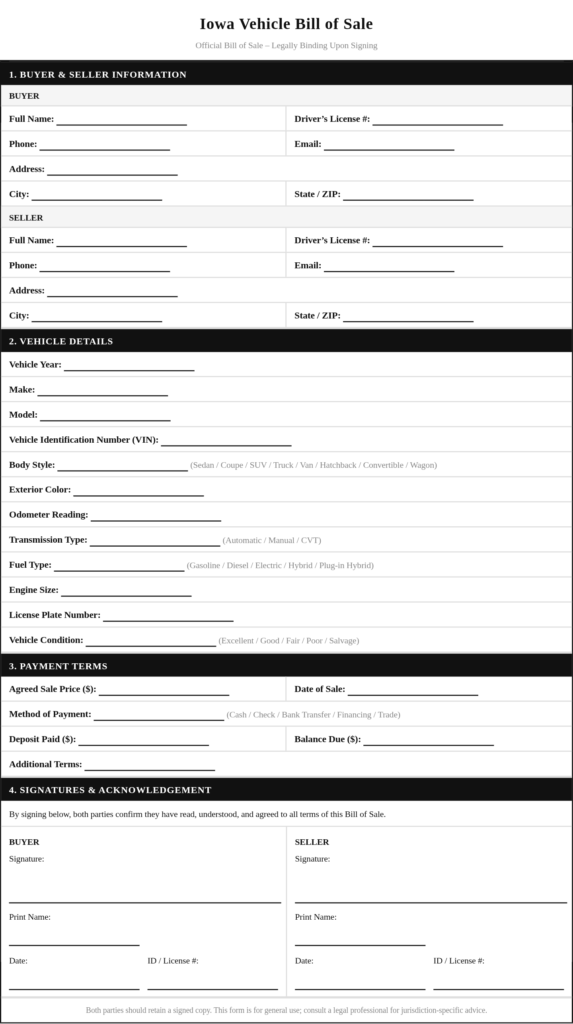
A Iowa Vehicle Bill of Sale is a legal document that records the transfer of ownership when a vehicle changes hands between a buyer and seller in Iowa. This purchase agreement captures essential details like the vehicle identification number, sale price, odometer reading, and the names and addresses of both parties involved in the transaction. It serves as an official purchase record that protects both the buyer and seller during private vehicle sales.
While Iowa law does not require a bill of sale form to register a vehicle, having this signed document provides crucial proof of the transaction and purchase price. The Iowa DMV recommends keeping a signed copy for your records, especially when dealing with private sales. This sale agreement becomes particularly important for tax purposes, resolving disputes, and documenting the condition of the vehicle at the time of transfer.
Free Printable Iowa Vehicle Bill of Sale Template [Editable]
Benefits of Iowa Vehicle Sale Agreement
- Provides documented proof of the purchase price for Iowa sales tax calculations when registering your vehicle at the county treasurer's office
- Protects sellers from liability issues after the vehicle changes ownership by establishing a clear date and terms of the transfer
- Creates a permanent purchase record that can help resolve disputes about the vehicle's condition or terms agreed upon during an as-is sale
- Supports your Iowa title application process by providing supplementary documentation of the legal transfer of ownership
- Establishes a paper trail for warranty claims or future resale by documenting the vehicle history and odometer disclosure at time of purchase
- Helps both parties comply with Iowa consumer protection laws by clearly outlining the terms and conditions of the vehicle sale agreement
What type of Vehicle can it be used for?
This Iowa bill of sale form can be used for any type of motor vehicle transaction including cars, trucks, motorcycles, ATVs, recreational vehicles, trailers, campers, and boats. Whether you're buying or selling a used sedan in Des Moines, a pickup truck in Cedar Rapids, or a motorcycle in Davenport, this legal document records the essential details of your private vehicle sale and protects both parties in the transaction.
Mistakes you should avoid while signing a Iowa Vehicle Bill of Sale
- Forgetting to include the complete vehicle identification number (VIN), which is essential for Iowa DMV registration and title transfer
- Leaving the purchase price blank or writing 'zero dollars,' which can create problems with Iowa sales tax assessment and look suspicious to authorities
- Not having both the buyer and seller sign and date the document on the same day the transaction occurs and money changes hands
- Failing to record the accurate odometer reading as required by federal law, which can result in penalties and legal complications
- Neglecting to specify that the sale is 'as-is' when applicable, leaving the seller potentially liable for future mechanical issues or repairs
- Not making copies for both parties before separating, which leaves one person without proof of the transaction terms or purchase record
Required Documents for Iowa Vehicle Sale Agreement
- Valid Iowa Certificate of Title properly signed by the seller in the assignment section, or out-of-state title if the vehicle is coming from another state
- Completed Iowa bill of sale form with signatures from both buyer and seller, including the date of transaction and full purchase price
- Iowa Application for Certificate of Title and/or Registration (Form 411007) to submit to your county treasurer's office
- Valid driver's license or government-issued photo identification for both parties to verify identities during the sale
- Odometer Disclosure Statement showing the current mileage, which is required by Iowa law for vehicles under 10 years old
- Proof of Iowa vehicle insurance coverage in the buyer's name before the vehicle can be registered and driven legally on Iowa roads
Frequently Asked Questions
Does Iowa require a bill of sale to transfer vehicle ownership?
Iowa does not legally require a bill of sale form to transfer a vehicle, but the Iowa DMV strongly recommends it as proof of purchase. The signed copy helps establish the sale price for tax purposes and protects both parties. Having this legal document can prevent disputes and provides a clear purchase record for future reference.
Does a Iowa vehicle bill of sale need to be notarized?
No, Iowa does not require a vehicle bill of sale to be notarized for the document to be valid. However, both the buyer and seller must sign the sale agreement for it to serve as an official purchase record. Some buyers or sellers may choose to have the document notarized for extra security, though it's not a legal requirement in Iowa.
What information must be included on a Iowa vehicle bill of sale?
Your Iowa bill of sale should include the full names and addresses of both buyer and seller, the complete vehicle identification number (VIN), make, model, year, odometer reading, purchase price, and date of sale. You should also note the vehicle's condition and specify if it's an as-is sale. Both parties need to sign and date this legal document to make the transfer of ownership official.
How much is sales tax on a vehicle purchase in Iowa?
Iowa charges a 5% state sales tax on vehicle purchases, plus an additional 1% local option tax in most counties, bringing the total to 6% in many areas. The tax is calculated based on the purchase price shown on your bill of sale form or the vehicle's book value, whichever is higher. You'll pay this sales tax when you register the vehicle at your county treasurer's office.
Can I use a handwritten bill of sale for a vehicle in Iowa?
Yes, a handwritten bill of sale is perfectly acceptable in Iowa as long as it includes all the necessary information about the vehicle and the transaction. The purchase agreement must be legible and signed by both parties with the correct date. Many people prefer using a printed bill of sale form to ensure nothing is missed, but handwritten documents are legally valid for recording the transfer of ownership.
Conclusion
Having a properly completed bill of sale form makes your vehicle transaction smoother and protects everyone involved. This legal document gives you a clear purchase record and helps when you visit the Iowa DMV to complete your title transfer and registration. Taking a few minutes to fill out this sale agreement correctly can save you from headaches later.
Keep your signed copy in a safe place along with other important vehicle paperwork. Whether you're buying your first car or selling a truck you've owned for years, this simple purchase agreement documents the transfer of ownership and provides peace of mind. A complete bill of sale is one of the smartest steps you can take in any private vehicle sale.
Related Posts