![Free Printable Editable Bill of Sale Form Template [PDF, WORD]](https://billofsale.authorizationletter.org/wp-content/uploads/2026/06/billofsale_logo-206x48.png)
Creating a detailed record of a sale can help protect both buyers and sellers throughout the transaction process. A Connecticut Bill of Sale provides written proof that ownership of an item has been transferred and outlines the agreed terms of the sale. It can be used for a variety of personal property transactions and helps keep essential information organized. By documenting the exchange properly, both parties can reduce the risk of misunderstandings and maintain a reliable record for future reference.
Download Free Printable Connecticut Bill of Sale Template
What Is a Connecticut Bill of Sale?
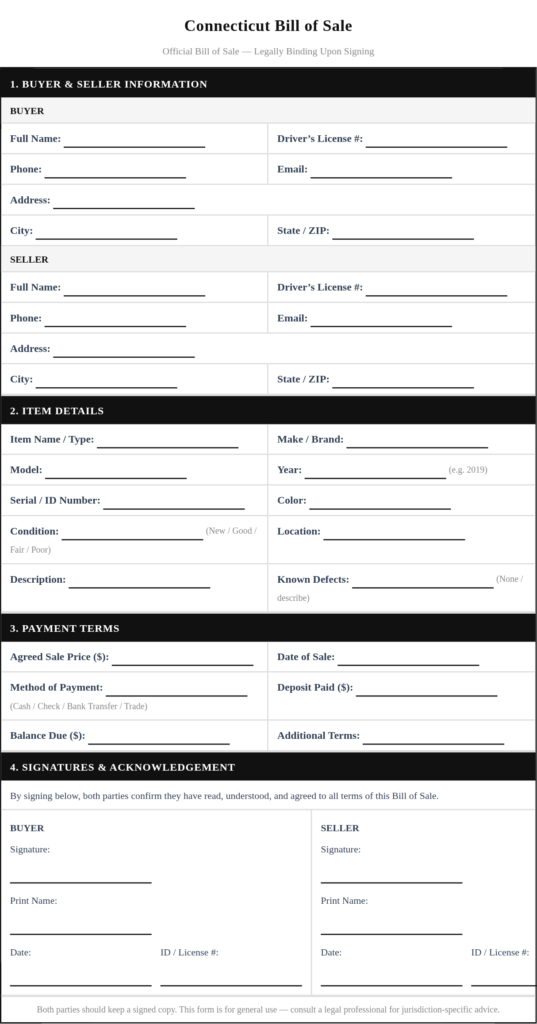
A Connecticut Bill of Sale is a legal document that records the transfer of ownership for personal property from a seller to a buyer. This purchase record provides proof of the sale agreement and documents important details like the sale price, item description, and the date of the transaction. Whether you're completing a private sale of a vehicle, boat, or other valuable items, this bill of sale form creates a legally binding record that protects both parties. Keeping a signed copy helps resolve disputes and proves you completed the property transfer properly under Connecticut sale requirements.
Documents required in Connecticut Bill of Sale
- Valid Government-Issued Identification
- Buyer and Seller Details
- Property Description
- Supporting Ownership Records
- Signed Bill of Sale Document
Information Included in a Connecticut Sale Agreement
- Buyer Information and Contact Details
- Seller Information and Contact Details
- Description of Property
- Sale Amount
- Date of Sale and Signatures.
How to Complete a Connecticut Bill of Sale Form
- Identify all parties involved by writing the full legal names and current addresses of both the buyer and seller at the top of the bill of sale form.
- Describe the item being sold in specific detail, including make, model, year, serial number, VIN, or any identifying features that clearly distinguish the personal property.
- State the sale price in both numerals and written words to prevent confusion or alterations, and indicate the payment method used for the transaction.
- Include the exact date of the sale and the location where the purchase agreement takes place in Connecticut.
- Confirm whether the seller transfers the property 'as is' or provides any warranties about the condition of the item being sold.
- Have both the buyer and seller review all information carefully, then sign and date the document to make the sale agreement legally binding.
- Make copies of the completed bill of sale so both the buyer and seller retain a signed copy for their records and future reference.
How to Notarize a CT Bill of Sale
- Understand that Connecticut does not require notarization for most bills of sale, but getting a notarized document adds an extra layer of legal protection and authenticity.
- Bring valid government-issued photo identification such as a driver's license or passport when you visit a notary public.
- Locate a notary public at banks, law offices, shipping stores, or through mobile notary services available throughout Connecticut.
- Present the completed but unsigned bill of sale form to the notary, along with your identification documents.
- Sign the bill of sale in the presence of the notary public after they verify your identity and witness your signature.
- Receive the notarized document with the notary's official seal and signature, which confirms the authenticity of the purchase record for future use.
FAQs
Q. Does a Connecticut bill of sale need to be notarized to be valid?
No, Connecticut does not require notarization for a bill of sale to be legally binding. However, having a notarized document provides stronger proof of authenticity and can help prevent fraud. A simple signed copy from both parties creates a valid purchase record.
Q. When should I get my bill of sale notarized in Connecticut?
You should consider notarization for high-value private sales or when one party requests extra security. Some lending institutions or insurance companies may require a notarized document before processing applications. Notarization proves that the signatures are genuine and that both parties signed willingly.
Q. How many copies of the bill of sale should I keep?
Both the buyer and seller should keep at least one signed copy of the purchase agreement for their permanent records. Make additional copies if you need to submit the legal document to the DMV, insurance company, or tax authority. Keeping multiple copies protects you if the original gets lost or damaged.
Q. What information must appear on a Connecticut bill of sale?
Your bill of sale form must include the full names and addresses of both parties, a detailed description of the personal property, and the sale price. You also need the date of the transaction and signatures from both the buyer and seller. Adding the item's condition and payment method strengthens the sale agreement.
Q. Can I use a bill of sale for any type of property transfer in Connecticut?
Yes, you can use a bill of sale for vehicles, boats, trailers, firearms, electronics, furniture, and most other personal property. Real estate transactions require different legal documents and cannot use a standard bill of sale. The purchase record confirms the transfer of ownership and protects both parties in the sale.
Conclusion
Creating a proper Connecticut Bill of Sale protects everyone involved in a private sale. This legal document serves as your proof of the property transfer and records essential details about the transaction. Both the buyer and seller benefit from having a signed copy that clearly states the sale price, item description, and terms of the purchase agreement. The bill of sale form provides evidence if questions arise later about ownership or the condition of the personal property at the time of sale.
While Connecticut bill of sale laws do not mandate notarization for most transactions, taking that extra step can strengthen your purchase record. A legally binding sale agreement gives you peace of mind and protects your interests whether you are buying or selling. Keep your completed bill of sale in a safe place along with other important documents. This simple step ensures you have the proof you need for registration, insurance, taxes, or any future disputes about the transfer of ownership.
Related Posts