![Free Printable Editable Bill of Sale Form Template [PDF, WORD]](https://billofsale.authorizationletter.org/wp-content/uploads/2026/06/billofsale_logo-206x48.png)
Creating a written record of a sale is an important step when transferring ownership of personal property. A Kentucky Bill of Sale helps buyers and sellers document the details of a transaction, including the purchase price, date of sale, and information about the property being transferred. This document serves as proof that the transaction occurred and can be useful for registration, tax, or ownership verification purposes. Keeping a completed form provides added protection for both parties and helps ensure that the terms of the agreement are clearly recorded.
Download Free Printable Kentucky Bill of Sale Template
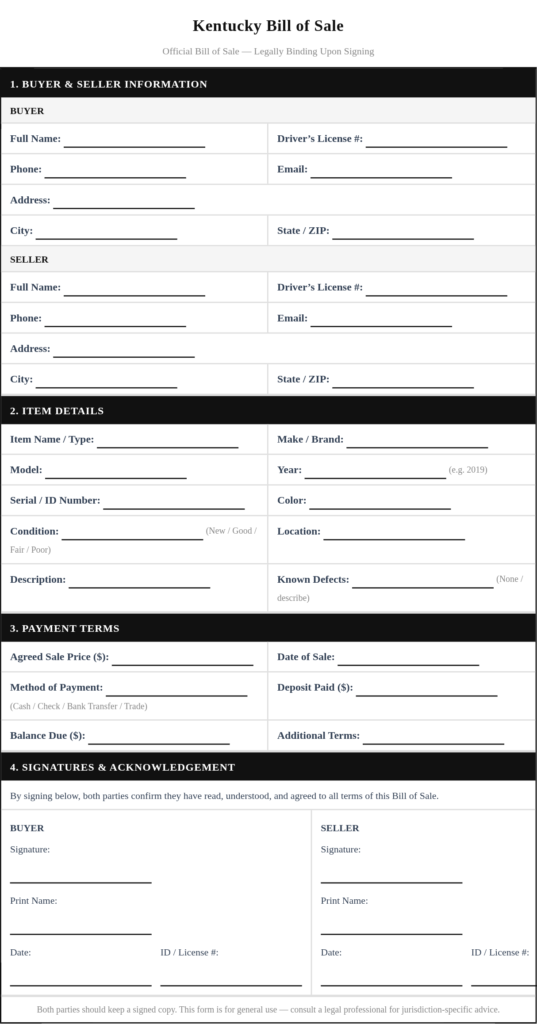 What Is a Kentucky Bill of Sale?
A Kentucky Bill of Sale is a legal document that records the transfer of ownership when someone sells personal property to another person. This signed copy proves the buyer paid an agreed sale price and now owns the item. You need this purchase record for private sales of vehicles, boats, firearms, and other valuable goods. The bill of sale form protects both the seller and buyer by creating a written sale agreement. It serves as proof of the property transfer and helps you register or title certain items with state agencies.
Documents required in Kentucky Bill of Sale
- Valid Government-Issued Identification
- Buyer and Seller Details
- Description of Property Being Sold
- Proof of Ownership
- Signed Bill of Sale Form
Information Included in a Kentucky Sale Agreement
- Buyer and Seller Identification Details
- Property Description
- Sale Amount and Payment Method
- Date of Agreement
- Signatures Confirming the Sale.
How to Complete a Kentucky Bill of Sale Form
- Write the date of the sale at the top of the bill of sale form. Include the full names and addresses of both the seller and the buyer.
- Describe the item being sold in detail. For vehicles, include the make, model, year, VIN, odometer reading, and license plate number. For other personal property, provide enough detail to identify the item clearly.
- State the sale price in both numbers and words. If the item is a gift, write 'gift' or '$0' to show no money changed hands.
- List the condition of the item as is or with any warranties. Most private sales transfer property in as-is condition without guarantees.
- Have both the seller and buyer sign and date the purchase agreement. Print your names clearly below each signature line.
- Make copies of the completed legally binding document. Give one signed copy to the buyer and keep one for the seller's records.
- Submit the bill of sale to the appropriate Kentucky agency if required. Vehicle sales need the form filed with the County Clerk when you register or title the vehicle.
How to Notarize a KY Bill of Sale
- Understand that Kentucky does not require notarization for most bills of sale. A notarized document adds extra legal protection, but the state considers signed bills of sale valid without a notary stamp.
- Decide whether you want notarization for added security. Some buyers and sellers prefer a notary's seal for high-value items or when dealing with strangers.
- Bring the completed but unsigned bill of sale form to a notary public if you choose notarization. Both the seller and buyer must appear in person with valid photo identification.
- Sign the document in front of the notary. The notary will watch you sign, verify your identity, and then stamp and sign the form to certify the signatures are authentic.
- Pay the notary fee, which typically ranges from five to ten dollars per signature. Keep the notarized sale agreement with your other important purchase records.
FAQs
Q. Is a handwritten Kentucky bill of sale valid?
Yes, a handwritten bill of sale is legally binding in Kentucky as long as it includes all necessary details. The document must show the buyer and seller names, item description, sale price, and signatures. Many people prefer printed forms because they look more professional and ensure nothing gets forgotten.
Q. Do I need to notarize my Kentucky bill of sale?
Kentucky does not require notarization for bills of sale. A simple signed copy works for most transactions. However, getting a notarized document can provide extra protection and may be helpful if anyone later questions the sale.
Q. Should both the buyer and seller keep a copy of the bill of sale?
Yes, both parties should keep a signed copy of the purchase record. The buyer needs it to prove ownership and register certain items. The seller needs it to show they no longer own the property and are not responsible for it after the sale.
Q. What information must a Kentucky bill of sale include?
Your sale agreement must include the date, buyer and seller names and addresses, detailed item description, and the sale price. For vehicles, add the VIN, make, model, year, and odometer reading. Both parties must sign the legal document to make the property transfer official.
Q. Can I use a bill of sale for a private vehicle sale in Kentucky?
Yes, you must use a bill of sale form when you sell a vehicle privately in Kentucky. The County Clerk requires this purchase agreement when the buyer registers and titles the vehicle. Kentucky sale requirements protect both parties and create an official record of the transfer of ownership.
Conclusion
A Kentucky Bill of Sale gives you solid proof when you buy or sell personal property in a private transaction. This simple legal document protects your interests whether you are the buyer getting a new item or the seller moving something out of your possession. The written record prevents misunderstandings about the sale price, condition, and terms of the transfer. You avoid future disputes when both parties sign and keep copies of the purchase agreement.
Kentucky keeps the process straightforward and does not burden you with complicated sale requirements. Most transactions need only a signed bill of sale form, not a notarized document. Take a few minutes to fill out the paperwork completely and accurately. Store your signed copy with other important records so you can find it quickly if questions arise later. This purchase record proves the property transfer happened legally and protects you for years to come.