![Free Printable Editable Bill of Sale Form Template [PDF, WORD]](https://billofsale.authorizationletter.org/wp-content/uploads/2026/06/billofsale_logo-206x48.png)
Documenting a sale in writing is one of the best ways to create a clear record of a transaction. A Missouri Bill of Sale helps buyers and sellers confirm the transfer of ownership while recording important details such as the purchase price, property description, and date of sale. This document can serve as proof of purchase and may be useful for registration, tax, or ownership verification purposes. Keeping a completed copy helps both parties maintain accurate records and reduces the likelihood of future disputes.
Download Free Printable Missouri Bill of Sale Template
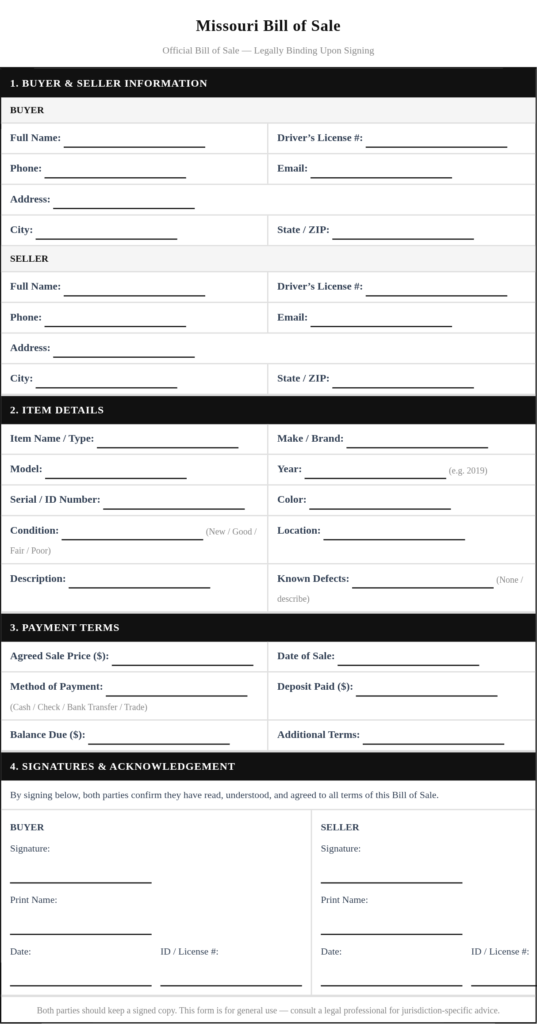 What Is a Missouri Bill of Sale?
A Missouri Bill of Sale is a legal document that records the transfer of ownership for personal property between a buyer and a seller. This bill of sale form provides proof of purchase and creates a binding record of the sale agreement. You need one whenever you buy or sell items like vehicles, boats, firearms, or other valuable goods in a private sale. The document protects both parties by documenting the sale price, item details, and the date of the property transfer. Keeping a signed copy helps resolve disputes and satisfies Missouri sale requirements.
Documents required in Missouri Bill of Sale
- Valid Photo ID
- Buyer and Seller Contact Details
- Property Description
- Ownership Verification Documents
- Signed Bill of Sale Agreement
Information Included in a Missouri Sale Agreement
- Buyer Information
- Seller Information
- Description of the Item Being Sold
- Purchase Amount
- Date of Sale and Authorized Signatures.
How to Complete a Missouri Bill of Sale Form
- Gather complete details about the item you are selling or buying, including make, model, serial number, VIN, and condition. Write down accurate information to avoid problems later.
- Fill in the buyer's full legal name, address, and contact information on the bill of sale form. Make sure you spell everything correctly.
- Enter the seller's complete name, address, and contact details in the designated section. Both parties must provide current information.
- Write the sale price clearly in both numbers and words to prevent confusion or fraud. Include whether the buyer paid in cash, check, or another method.
- Describe the personal property being sold with as much detail as possible. Include any damage, defects, or special features that affect value.
- Sign and date the purchase agreement on the lines provided for both buyer and seller. Each party acknowledges the legally binding transfer of ownership.
- Make copies of the signed document so both the buyer and seller keep a purchase record. Store your copy in a safe place with other important papers.
How to Notarize a MO Bill of Sale
- Understand that Missouri does not require notarization for most bills of sale, though some buyers or sellers prefer a notarized document for added security. Check if your specific transaction involves a vehicle title transfer or another situation where notarization helps.
- Locate a notary public at your bank, courthouse, shipping store, or through a mobile notary service if you decide to notarize. Many notaries charge a small fee for their services.
- Bring valid government-issued photo identification such as a driver's license or passport when you visit the notary. Both the buyer and seller must appear in person with their IDs if both signatures need notarization.
- Sign the bill of sale form in front of the notary public, not before you arrive. The notary watches you sign to verify your identity and willingness to complete the sale agreement.
- Wait for the notary to stamp, sign, and date the document with their official seal. This creates a notarized document that carries extra legal weight and may satisfy certain lenders or registration offices.
- Keep the notarized copy with your other important records as proof of the property transfer. Some buyers request notarization for high-value items even when Missouri law does not require it.
FAQs
Q. Does a bill of sale count as a legally binding document in Missouri?
Yes, a properly completed bill of sale form serves as a legally binding agreement between buyer and seller. The document proves the transfer of ownership and records the terms both parties agreed to. Courts recognize signed bills of sale as valid purchase records in disputes.
Q. Do I need to get my Missouri bill of sale notarized?
Missouri does not require notarization for most bills of sale, including vehicle transactions. However, getting a notarized document adds an extra layer of authenticity and can prevent fraud. Some lenders or buyers may request notarization even when the law does not mandate it.
Q. Should both the buyer and seller keep a copy of the bill of sale?
Both parties should keep a signed copy of the purchase agreement for their records. The buyer needs proof of purchase for registration, insurance, or resale purposes. The seller needs documentation showing they transferred ownership and are no longer responsible for the property.
Q. What information must appear on a Missouri bill of sale?
A complete bill of sale form includes buyer and seller names and addresses, the sale price, a detailed description of the personal property, and the date of sale. Both parties must sign the document to make it valid. Additional details like payment method and item condition strengthen the purchase record.
Q. Can I use a bill of sale to register a vehicle in Missouri?
You need a bill of sale along with other documents to register a vehicle purchased in a private sale. The Missouri Department of Revenue requires proof of ownership transfer and sale price for title and registration purposes. Bring your signed bill of sale, the previous title, and payment for fees to your local license office.
Conclusion
A Missouri Bill of Sale protects both buyers and sellers by creating a clear record of any personal property transaction. This simple legal document prevents misunderstandings about sale price, item condition, and transfer of ownership details. Whether you purchase a car, boat, equipment, or other valuable goods, a written sale agreement gives you proof of the transaction and establishes your rights.
Missouri law does not require notarization for most bills of sale, but creating a signed purchase record remains essential for both parties. Keep your copy in a safe place along with other important documents related to your property. A properly completed bill of sale form serves as your best protection if questions arise later about the purchase or ownership history.