![Free Printable Editable Bill of Sale Form Template [PDF, WORD]](https://billofsale.authorizationletter.org/wp-content/uploads/2026/06/billofsale_logo-206x48.png)
Proper paperwork can make any sale more secure and easier to verify in the future. A Florida Bill of Sale provides a written record of a transaction and helps document important details such as the buyer, seller, purchase price, and date of transfer. Whether the sale involves a vehicle, boat, or other personal property, this document helps establish proof of ownership transfer. Keeping a completed form on file can help both parties avoid disputes and maintain accurate records for legal or administrative purposes.
Download Free Printable Florida Bill of Sale Template
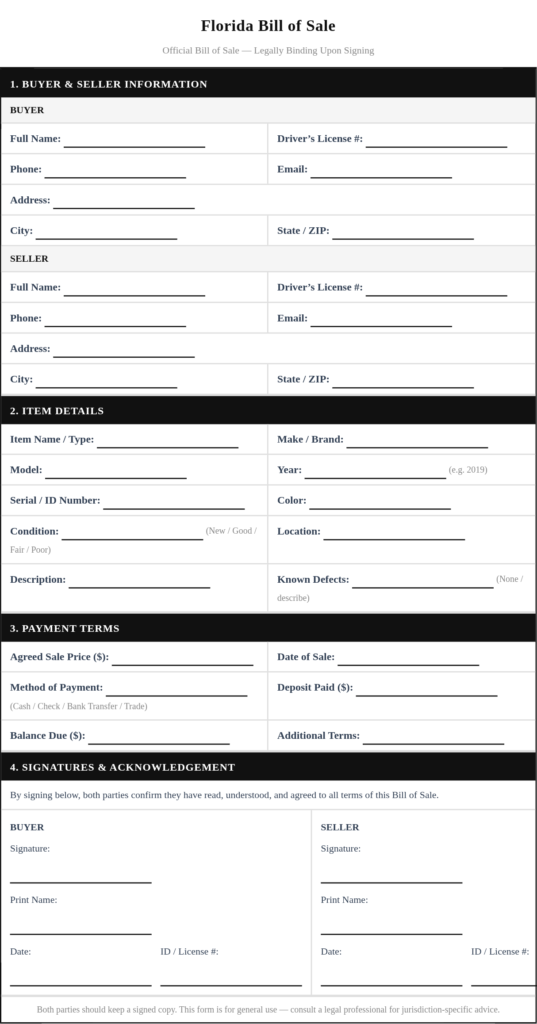
What Is a Florida Bill of Sale?
A Florida Bill of Sale is a legal document that records the transfer of ownership of personal property from a seller to a buyer. This purchase record serves as proof of sale and establishes the sale price, date, and terms of the private sale. Whether you're buying or selling a vehicle, boat, trailer, or other personal property, this signed copy protects both parties by creating a clear, written agreement. Florida law does not always require a bill of sale form, but having one safeguards everyone involved in the property transfer.
Documents required in Florida Bill of Sale
- Valid Photo Identification
- Buyer and Seller Contact Details
- Property Information
- Ownership Verification Documents
- Signed Bill of Sale Form
Information Included in a Florida Sale Agreement
- Buyer and Seller Contact Information
- Description of the Property Being Transferred
- Sale Price
- Date of Agreement
- Signatures Confirming the Sale.
How to Complete a Florida Bill of Sale Form
- Identify the buyer and seller by writing their full legal names and current addresses on the bill of sale form.
- Describe the item being sold in detail. Include make, model, year, serial number, VIN, or other identifying features so the property transfer is clear.
- State the sale price in both numbers and words. If the item is a gift, write 'gift' or '$0' to show no money changed hands.
- List the sale date and location where the purchase agreement takes place.
- Add any warranties or disclosures. If you sell the item 'as-is' with no guarantees, state that clearly in the sale agreement.
- Sign and date the document. Both the seller and buyer must provide their signatures to make the purchase record legally binding.
- Make copies for each party. Each person should keep a signed copy for their records after the transaction is complete.
How to Notarize a FL Bill of Sale
- Check if your item requires notarization. Florida does not require most bills of sale to be notarized, but certain transactions like boat sales over a specific length may benefit from a notarized document for added legal protection.
- Bring valid photo identification to the notary. Both buyer and seller should have a current driver's license, passport, or state-issued ID.
- Sign the Florida bill of sale in front of the notary public. Do not sign beforehand, as the notary must witness your signature to make it official.
- Pay the notary fee. Notaries in Florida typically charge between five and fifteen dollars per signature.
- Receive the notarized document. The notary will stamp and sign the bill of sale form, creating a stronger legal record of your property transfer.
FAQs
Q. Is a Florida bill of sale legally binding without notarization?
Yes, a bill of sale form is legally binding in Florida even without notarization as long as both parties sign it. The signed copy serves as a valid purchase record and proof of the transfer of ownership. Notarization adds extra legal weight but is not required for most personal property sales.
Q. Do I need to notarize my Florida bill of sale?
Florida does not require notarization for most bills of sale. However, a notarized document provides stronger legal protection and may be helpful if disputes arise later. Some buyers or financial institutions may request notarization even when Florida sale requirements do not mandate it.
Q. Should both the buyer and seller keep a copy of the bill of sale?
Yes, both parties should keep a signed copy of the purchase agreement for their records. The seller may need proof that ownership transferred, especially for tax or liability purposes. The buyer needs the document to register the item or prove they legally own the personal property.
Q. What information must a Florida bill of sale include?
A proper bill of sale form must include the names and addresses of the buyer and seller, a detailed description of the item sold, the sale price, and the date of sale. Both parties must sign the legal document to complete the property transfer. Additional details like odometer readings or VINs may be required for vehicles.
Q. Can I use a bill of sale for a private vehicle sale in Florida?
Yes, a Florida bill of sale works perfectly for private vehicle sales between individuals. This purchase record helps the buyer register the vehicle with the Florida DMV and protects the seller from future liability. Florida law requires additional documents like the title, but the sale agreement strengthens your legal position.
Conclusion
Creating a Florida Bill of Sale protects both parties during any private sale or property transfer. This simple legal document establishes a clear record of the sale price, the item sold, and the terms agreed upon by the seller and buyer. Even though Florida sale requirements do not always mandate a bill of sale form, having one prevents misunderstandings and provides proof of the transaction if questions arise later.
Whether you need a notarized document or a basic signed copy depends on what you are selling and your personal preference. Boats, vehicles, trailers, firearms, and other high-value personal property all benefit from a detailed purchase agreement. Keep your signed copy in a safe place along with other important records. A well-prepared sale agreement gives you peace of mind and legal protection long after the transaction is complete.
Related Posts