![Free Printable Editable Bill of Sale Form Template [PDF, WORD]](https://billofsale.authorizationletter.org/wp-content/uploads/2026/06/billofsale_logo-206x48.png)
Having a written record of a transaction can help ensure that both parties understand the terms of the sale. An Illinois Bill of Sale documents important information such as the buyer, seller, property description, and purchase price in a single place. This form serves as proof that ownership has been transferred and can be helpful for registration, tax, or record-keeping purposes. By creating a detailed sales record, buyers and sellers can reduce the risk of disputes and maintain clear documentation for future reference.
Download Free Printable Illinois Bill of Sale Template
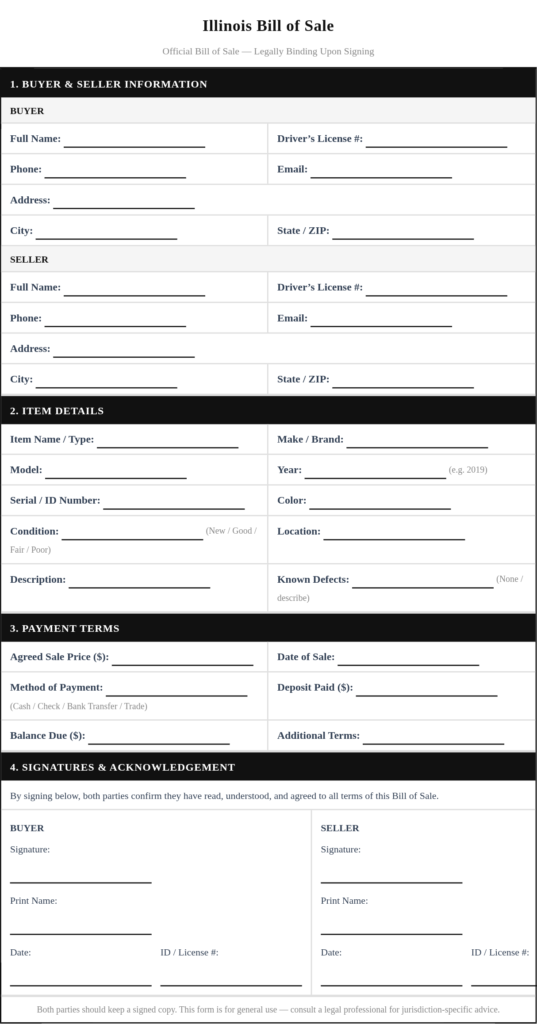 What Is a Illinois Bill of Sale?
An Illinois Bill of Sale is a legal document that records the transfer of ownership for personal property between a buyer and a seller. This written purchase record protects both parties by creating proof of the sale agreement and the sale price. You need a bill of sale form for private sales of vehicles, boats, firearms, electronics, and other valuable items. While not always required by law, this signed copy serves as your purchase agreement and helps resolve disputes. The document becomes legally binding once both parties complete and sign it, establishing a clear property transfer.
Documents required in Illinois Bill of Sale
- Valid Government-Issued ID
- Buyer and Seller Contact Information
- Item Description
- Proof of Property Ownership
- Signed Bill of Sale Form
Information Included in a Illinois Sale Agreement
- Buyer and Seller Details
- Property Description and Condition
- Sale Price
- Payment Information
- Signatures Confirming the Transfer of Ownership.
How to Complete a Illinois Bill of Sale Form
- Write the full legal names and addresses of both the seller and the buyer at the top of the bill of sale form. Include contact information so both parties can reach each other if questions arise later.
- Describe the property being sold in specific detail. For vehicles, list the make, model, year, VIN, and odometer reading. For other personal property, include serial numbers, brand names, and identifying features.
- State the sale price clearly in both numbers and written words. Specify whether the buyer paid cash, check, or another payment method.
- Disclose the condition of the property honestly. Note if you are selling the item as-is or with a warranty. Include any known defects or damage.
- Add the date of the transaction. This establishes when the transfer of ownership officially occurred.
- Both the buyer and seller must sign and print their names. Each party should initial any corrections or additions made to the document.
- Make copies of the completed purchase record for both parties. The buyer and seller should each keep a signed copy for their records.
How to Notarize a IL Bill of Sale
- Understand that Illinois does not require notarization for most bills of sale. The document becomes legally binding with just the signatures of the buyer and seller in most private sale situations.
- Consider getting a notarized document anyway for high-value transactions. A notary public verifies the identities of both parties and witnesses the signing, which adds extra legal protection.
- Bring valid government-issued photo identification to the notary appointment. Both the buyer and seller must appear in person with unexpired IDs such as a driver's license or passport.
- Sign the bill of sale form in front of the notary public. Do not sign beforehand, as the notary must witness you signing the document.
- Pay the notary fee, which typically ranges from five to ten dollars in Illinois. The notary will then stamp and sign the document to certify it.
- Keep your notarized document in a safe place. This extra step can help prevent fraud and makes the sale agreement easier to enforce if disputes arise.
FAQs
Q. Does an Illinois bill of sale need to be notarized to be valid?
No, Illinois does not require notarization for a bill of sale to be legally binding in most cases. The document becomes valid when both the buyer and seller sign it. However, notarization adds an extra layer of security and can help prove authenticity if ownership disputes arise later.
Q. Can I use a handwritten bill of sale in Illinois?
Yes, a handwritten bill of sale works perfectly fine as long as it includes all necessary information. The legal document must identify both parties, describe the personal property, state the sale price, and include signatures from the buyer and seller. Printed forms simply make the process easier and help ensure you don't forget important details.
Q. How many copies of the bill of sale should I keep?
Both the buyer and seller should keep a signed copy of the purchase record. Make at least two copies so each party has proof of the property transfer. If you get the document notarized, you may want a third copy for extra security or to submit to the DMV for vehicle transactions.
Q. What information must an Illinois bill of sale include?
Your bill of sale form must include the names and addresses of both parties, a detailed description of the item sold, and the purchase price. You should also include the date of sale and signatures from both the buyer and seller. For vehicles, Illinois requires the VIN, make, model, year, and odometer reading as well.
Q. Does a bill of sale protect me as a buyer in Illinois?
Yes, a purchase agreement protects buyers by creating a written record of what you bought and how much you paid. This legally binding document proves the transfer of ownership occurred and can help you register property or resolve disputes. Always get a signed copy before handing over payment to protect your rights in the sale.
Conclusion
Creating an Illinois Bill of Sale protects both buyers and sellers during any private sale of personal property. This simple legal document provides proof of the transfer of ownership and records important details like the sale price, item description, and date of transaction. Whether you are buying a used car from a neighbor or selling electronics online, having a signed copy of the purchase record prevents misunderstandings and legal problems down the road. You can find free bill of sale forms online or create your own as long as you include all required information.
While Illinois does not require notarization for most bills of sale, taking that extra step adds security to high-value transactions. Keep your purchase agreement in a safe place along with other important documents. A properly completed bill of sale form serves as your proof of purchase and helps establish clear ownership rights. Taking a few minutes to fill out this legally binding document correctly can save you from headaches and disputes later.