![Free Printable Editable Bill of Sale Form Template [PDF, WORD]](https://billofsale.authorizationletter.org/wp-content/uploads/2026/06/billofsale_logo-206x48.png)
A New Jersey General Bill of Sale is a legal document that records the transfer of ownership for personal property between a buyer and a seller. This purchase agreement serves as proof that a transaction took place and provides important details like the sale price, item description, date of sale, and the identities of both parties involved. Whether you’re buying used furniture, electronics, equipment, or other personal items through a private sale, having a signed bill of sale form protects everyone involved.
This sale agreement is especially valuable in New Jersey because it creates a clear purchase record that can help resolve disputes and verify ownership. While New Jersey doesn’t require a general bill of sale for most personal property transactions, having this legal document is considered a best practice. It establishes the terms of the sale, documents the condition of the item (including as-is sales), and provides both parties with a signed copy for their records.
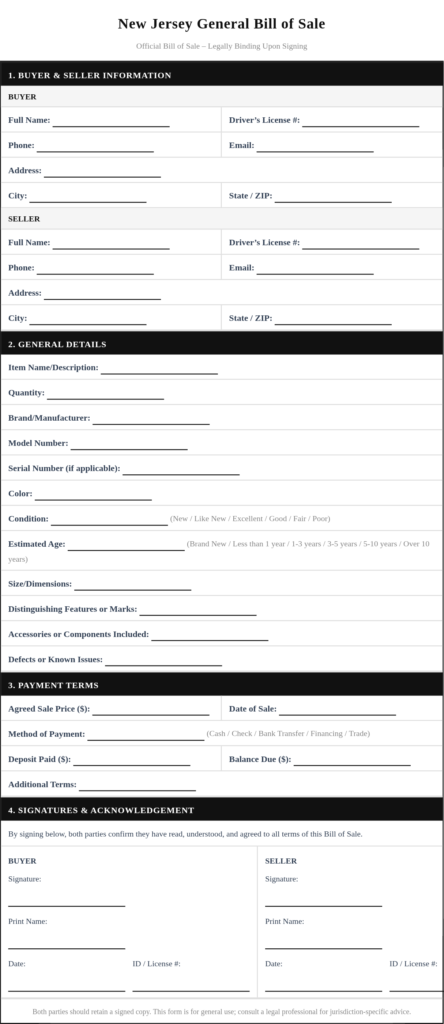
Free Printable New Jersey General Bill of Sale Template [Editable]
 Benefits of New Jersey General Sale Agreement
- Provides legal proof of ownership transfer under New Jersey personal property laws, which can be crucial if questions arise about who owns an item after a private sale
- Creates a detailed purchase record with the sale price and item description, helpful for New Jersey residents when filing insurance claims or reporting losses for tax purposes
- Protects sellers from future liability by documenting the condition of property at the time of sale, particularly important for as-is sales common in New Jersey private transactions
- Establishes clear terms and conditions of the sale that both parties have agreed to, reducing the likelihood of misunderstandings or disputes down the road
- Serves as documentation for business records and personal accounting, which New Jersey residents may need when managing estates, inventory, or personal asset tracking
- Offers peace of mind for both buyer and seller by formalizing the transaction with a signed copy that each party can keep in their records
What type of General can it be used for?
A New Jersey General Bill of Sale can be used for a wide variety of personal property transactions throughout the state. This versatile legal document works for selling or buying electronics, furniture, appliances, tools, machinery, equipment, jewelry, collectibles, artwork, and other valuable items. It's commonly used in garage sales, estate sales, online marketplace transactions, and person-to-person deals where no specialized bill of sale is required.
Mistakes you should avoid while signing a New Jersey General Bill of Sale
- Failing to include a complete and accurate description of the item being sold, which can lead to confusion about exactly what property was transferred in the transaction
- Not clearly stating whether the sale is 'as-is' or if any warranties are provided, leaving both parties vulnerable to disagreements about the condition of the property after the sale
- Forgetting to have both the buyer and seller sign and date the bill of sale form, which can make the document invalid or difficult to enforce as proof of the transaction
- Leaving out the actual purchase price or method of payment, which creates problems if either party needs to prove the value of the transaction for tax or insurance purposes
- Using vague or incomplete contact information for either party, making it nearly impossible to reach someone if issues arise after the private sale is complete
- Not keeping a signed copy of the purchase agreement for your own records, which means you have no documentation if you need to prove ownership or sale details later
Required Documents for New Jersey General Sale Agreement
- A completed and accurate bill of sale form that includes all essential transaction details like the date, purchase price, and full description of the personal property being sold
- Valid government-issued photo identification from both the buyer and seller to verify the identities of all parties involved in the sale agreement
- Proof of ownership documentation such as previous bills of sale, receipts, or other records showing the seller has the right to transfer the property
- Any existing warranties, manuals, or certificates of authenticity that relate to the item being sold, which should be mentioned in the bill of sale if they're being transferred
- Payment receipt or documentation showing how the buyer paid the seller (check number, money order, cash receipt, or electronic payment confirmation)
- Additional signed copies of the legal document so that both the buyer and seller can retain their own records of the personal property sale
Frequently Asked Questions
Do I need a bill of sale for personal property in New Jersey?
While New Jersey doesn't legally require a general sale agreement for most property transactions, it's recommended to use one. This legal document protects both parties by creating an official purchase record and proof of the transfer of ownership. Having a signed sale agreement is especially important for high-value items or when you need documentation for insurance, tax, or legal purposes.
Does a New Jersey General Bill of Sale need to be notarized?
No, a general bill of sale does not need to be notarized in New Jersey for most personal property sales. However, both the buyer and seller should sign and date the document to make it valid. While notarization isn't required, some people choose to have their bill of sale form notarized anyway to add an extra layer of authenticity and legal protection to the transaction.
Can I use a General Bill of Sale for a vehicle in New Jersey?
While you can document a vehicle sale with a general bill of sale, New Jersey requires specific forms for motor vehicle transfers through the Motor Vehicle Commission. For cars, motorcycles, and other titled vehicles, you should use the proper vehicle title transfer documents. A general bill of sale works best for personal property that doesn't require title transfers, like furniture, electronics, and household items.
What should I include in a New Jersey bill of sale for personal property?
Your bill of sale form should include the full names and addresses of both buyer and seller, a detailed description of the item being sold, the sale price and payment method, the date of sale, and signatures from both parties. You should also clearly state if the sale is 'as-is' or if any warranties apply. The more detailed your purchase agreement, the better protection you'll have if any disputes arise later.
Is a handwritten bill of sale valid in New Jersey?
Yes, a handwritten bill of sale is legally valid in New Jersey as long as it contains all the necessary information and is signed by both parties. However, using a printed or typed bill of sale form is usually preferred because it's easier to read and looks more professional. Whether handwritten or typed, make sure both the buyer and seller keep a signed copy of the legal document for their records.
Conclusion
A New Jersey General Bill of Sale is a simple yet powerful tool for documenting personal property sales. This legal document creates a clear purchase record that protects both buyers and sellers during private transactions. Whether you're selling furniture at a garage sale or purchasing expensive equipment from another individual, having a proper sale agreement in place gives everyone peace of mind.
Taking a few minutes to complete a bill of sale form can save you from headaches down the road. Make sure both parties sign the document, keep your signed copy in a safe place, and include all the important details about the transfer of ownership. Following New Jersey personal property laws and best practices ensures your private sale goes smoothly from start to finish.