![Free Printable Editable Bill of Sale Form Template [PDF, WORD]](https://billofsale.authorizationletter.org/wp-content/uploads/2026/06/billofsale_logo-206x48.png)
Keeping a detailed record of a transaction can help both buyers and sellers feel more confident throughout the sale process. A North Carolina Bill of Sale provides written proof that ownership of personal property has been transferred from one party to another. This document records important information about the sale and helps establish a clear agreement between the parties involved. Whether used for a vehicle or other valuable property, maintaining a completed form can support future verification needs and provide a reliable record of the transaction.
Download Free Printable North Carolina Bill of Sale Template
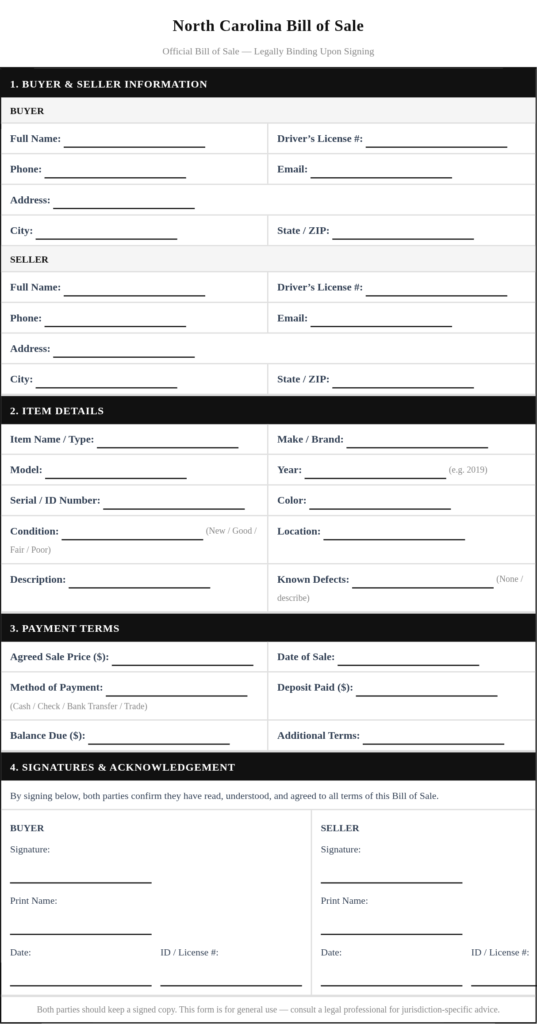 What Is a North Carolina Bill of Sale?
A North Carolina Bill of Sale is a legal document that records the transfer of ownership for personal property between a buyer and a seller. You need one to create a clear purchase record that shows the sale price, date, and details about the item sold. This signed copy protects both parties in a private sale by providing proof of the transaction. The document serves as a purchase agreement and helps resolve disputes about property transfer. Whether you sell a car, boat, or other valuable items, a bill of sale form keeps everyone legally protected.
Documents required in North Carolina Bill of Sale
- Government-Issued Photo Identification
- Buyer and Seller Information
- Property Details and Description
- Supporting Ownership Documents
- Signed Bill of Sale Form
Information Included in a North Carolina Sale Agreement
- Buyer and Seller Details
- Description and Condition of the Property
- Purchase Price
- Payment Information
- Signatures Confirming Ownership Transfer.
How to Complete a North Carolina Bill of Sale Form
- Write the full legal names and addresses of both the buyer and seller at the top of the bill of sale form. Include contact information so each party can reach the other if needed.
- Describe the personal property in detail, including make, model, year, serial number, VIN, or any identifying features. Be specific so there is no confusion about what changes hands.
- State the sale price clearly in both numbers and words. If the item is a gift, write zero dollars or gift to show no money changed hands.
- Include the date of the sale and the location where the transaction takes place. This establishes when ownership officially transfers from seller to buyer.
- Add any warranties, guarantees, or as-is statements. Most private sales happen as-is, meaning the buyer accepts the property in its current condition without guarantees.
- Both buyer and seller must sign and date the document. Each person should print their name clearly next to their signature.
- Make copies for both parties and keep the signed copy in a safe place. The buyer may need this purchase record for registration or tax purposes.
How to Notarize a NC Bill of Sale
- Check whether your specific transaction requires a notarized document. North Carolina does not require notarization for most bills of sale, but lenders, DMV offices, or buyers may request it for added security.
- Bring valid government-issued photo identification such as a driver's license or passport. The notary must verify your identity before notarizing any legal document.
- Sign the bill of sale in front of the notary public, not beforehand. The notary watches you sign to confirm your identity and willingness to complete the sale agreement.
- Pay the notary fee, which typically ranges from five to fifteen dollars. Some banks offer free notary services to account holders.
- Receive the notarized document with the official seal and signature. This stamped version provides extra proof that the property transfer is legally binding and authentic.
FAQs
Q. Does a North Carolina Bill of Sale need to be notarized to be valid?
No, North Carolina does not require notarization for a bill of sale to be legally binding. The document is valid when both buyer and seller sign it. However, getting a notarized document adds an extra layer of authenticity that some buyers or financial institutions prefer.
Q. Can I use a handwritten bill of sale in North Carolina?
Yes, you can create a handwritten bill of sale form as long as it includes all essential information. The document must clearly show the buyer, seller, item description, sale price, date, and signatures. Typed forms reduce errors and look more professional, but handwritten versions work just as well legally.
Q. Should both the buyer and seller keep copies of the bill of sale?
Both parties should keep a signed copy of the purchase record for their files. The buyer needs it for vehicle registration, tax purposes, or proof of ownership. The seller keeps it as evidence the property transfer happened and to protect against future liability claims.
Q. What information must appear on a North Carolina bill of sale?
Your bill of sale must include the names and addresses of buyer and seller, a detailed description of the personal property, and the sale price. Add the sale date and both signatures to make the sale agreement complete. For vehicles, include the VIN, make, model, year, and odometer reading.
Q. Does a bill of sale prove ownership in North Carolina?
A bill of sale serves as a purchase record but does not always prove legal ownership by itself. For vehicles, the buyer must also transfer the title at the DMV. The document shows the transaction occurred and supports your ownership claim, especially when combined with other paperwork like titles or registrations.
Conclusion
A North Carolina Bill of Sale protects both buyer and seller by documenting the transfer of ownership in clear, simple terms. This legal document creates a permanent purchase record that prevents misunderstandings and provides proof if disputes arise later. You do not need a lawyer to draft a valid sale agreement, just accurate information and signatures from both parties. Most transactions do not require a notarized document, though notarization adds extra authenticity when needed.
Whether you complete a private sale for a car, boat, furniture, or other personal property, keeping signed copies benefits everyone involved. The seller proves they no longer own the item and bear no future responsibility. The buyer holds proof of purchase and can register or insure their new property. Taking a few minutes to fill out a proper bill of sale form saves hours of trouble down the road and keeps your transaction legally binding and transparent.