![Free Printable Editable Bill of Sale Form Template [PDF, WORD]](https://billofsale.authorizationletter.org/wp-content/uploads/2026/06/billofsale_logo-206x48.png)
A successful property transfer often depends on accurate and complete documentation. An Indiana Bill of Sale helps buyers and sellers record the details of a transaction while confirming that ownership has changed hands. This document can be used for a wide range of personal property sales and provides valuable proof of purchase. Keeping a properly completed form can make future verification easier and help both parties maintain a reliable record of the agreement.
Download Free Printable Indiana Bill of Sale Template
 What Is a Indiana Bill of Sale?
An Indiana Bill of Sale is a legal document that records the transfer of ownership for personal property between a seller and a buyer. This signed copy serves as proof of the purchase and details the sale price, item description, and the date of the transaction. Whether you are completing a private sale of a vehicle, boat, or other personal property, this bill of sale form creates a legally binding purchase record. The purchase agreement protects both parties by documenting the sale terms and confirming that the property transfer occurred on a specific date.
Documents required in Indiana Bill of Sale
- Government-Issued Identification
- Buyer and Seller Details
- Property Description
- Ownership Verification Records
- Completed Bill of Sale Form
Information Included in a Indiana Sale Agreement
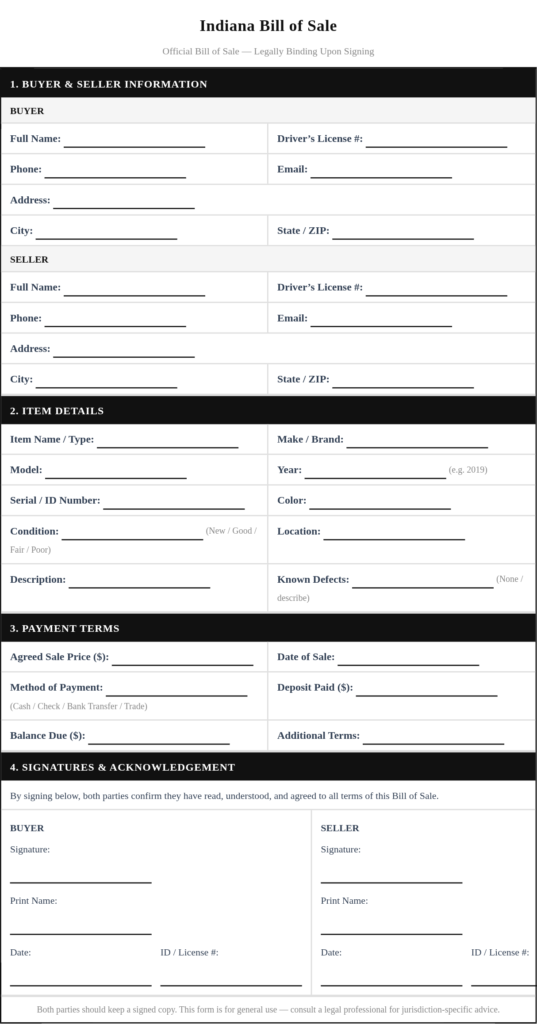
- Full Names and Contact Details of Buyer and Seller
- Description of the Property
- Purchase Amount
- Date of Sale
- Signatures of Both Parties.
How to Complete a Indiana Bill of Sale Form
- Identify the buyer and seller by writing the full legal names and current addresses of both parties at the top of the bill of sale form.
- Describe the property being sold in detail, including make, model, year, serial number, VIN, or other identifying features that clearly distinguish the item.
- State the sale price in both numbers and words, and indicate the payment method used to complete the transaction.
- Include the date of sale and the location where the transaction takes place to establish when the transfer of ownership occurred.
- Add any warranties or disclosures, such as selling the item as-is or noting any known defects or liens on the property.
- Have both the buyer and seller sign and date the document in the presence of each other to make the sale agreement official.
- Make copies of the completed legal document so both the buyer and seller retain a signed copy for their records.
How to Notarize a IN Bill of Sale
- Check whether your specific transaction requires notarization, as Indiana does not mandate notarization for most bills of sale, though it adds legal weight and authenticity.
- Bring the completed but unsigned bill of sale form, valid government-issued photo identification for both parties, and any supporting documents related to the sale.
- Locate a notary public at a bank, shipping store, law office, or county clerk's office, or use a mobile notary service that comes to your location.
- Sign the notarized document in front of the notary while the notary confirms your identity and witnesses the signatures of both the buyer and seller.
- Allow the notary to complete the notarial certificate by adding their signature, seal, and commission information to the legal document.
- Keep the notarized bill of sale in a safe place, as this legally binding record provides stronger proof of the property transfer if disputes arise later.
FAQs
Q. Does an Indiana bill of sale have to be notarized to be valid?
No, Indiana does not require notarization for a bill of sale to be legally binding. However, getting the document notarized adds credibility and can help prevent disputes. A notarized document provides extra proof that both parties signed willingly and the transaction occurred as stated.
Q. What items require a bill of sale in Indiana?
Indiana requires a bill of sale for vehicle title transfers and recommends using one for boats, trailers, motorcycles, firearms, and other valuable personal property. Even when not legally required, a purchase record protects both the buyer and seller. The legal document proves the transfer of ownership and the agreed sale price.
Q. Should both the buyer and seller keep a copy of the bill of sale?
Yes, both parties should keep a signed copy of the bill of sale form for their personal records. The buyer may need it to register the property or prove ownership later. The seller should retain the purchase agreement as proof they no longer own the item and to protect against future liability.
Q. What information must appear on an Indiana bill of sale?
A valid sale agreement must include the full names and addresses of the buyer and seller, a detailed description of the property, the sale price, and the date of the transaction. Both parties must sign the legal document to confirm the purchase. Adding the payment method and any warranties makes the purchase record more complete.
Q. Can I write my own bill of sale or do I need a lawyer?
You can create your own bill of sale form without hiring a lawyer, as long as it includes all required information and both parties sign it. Many people use free templates or write a simple purchase agreement themselves. The signed copy becomes a legally binding document once both the buyer and seller agree to the terms and complete the property transfer.
Conclusion
Completing an Indiana Bill of Sale protects both the buyer and seller during any private sale of personal property. This legal document creates a clear purchase record that proves the transfer of ownership, establishes the sale price, and documents the terms agreed upon by both parties. Whether you are selling a car, boat, or other valuable item, a signed copy of the bill of sale form provides peace of mind and legal protection.
While Indiana does not require notarization for most transactions, having your purchase agreement notarized strengthens its value as a legally binding document. Keep your bill of sale in a safe place along with other important records related to the property transfer. A well-prepared sale agreement prevents misunderstandings and gives both the buyer and seller proof of the transaction for years to come.