![Free Printable Editable Bill of Sale Form Template [PDF, WORD]](https://billofsale.authorizationletter.org/wp-content/uploads/2026/06/billofsale_logo-206x48.png)
Proper documentation is an essential part of transferring ownership of personal property. A Pennsylvania Bill of Sale provides written evidence of a transaction and helps establish a clear agreement between the buyer and seller. This form records key details about the sale and can serve as proof of purchase when needed. Keeping a completed document helps support ownership verification, simplifies future record-keeping, and provides additional protection for both parties involved in the transaction.
Download Free Printable Pennsylvania Bill of Sale Template
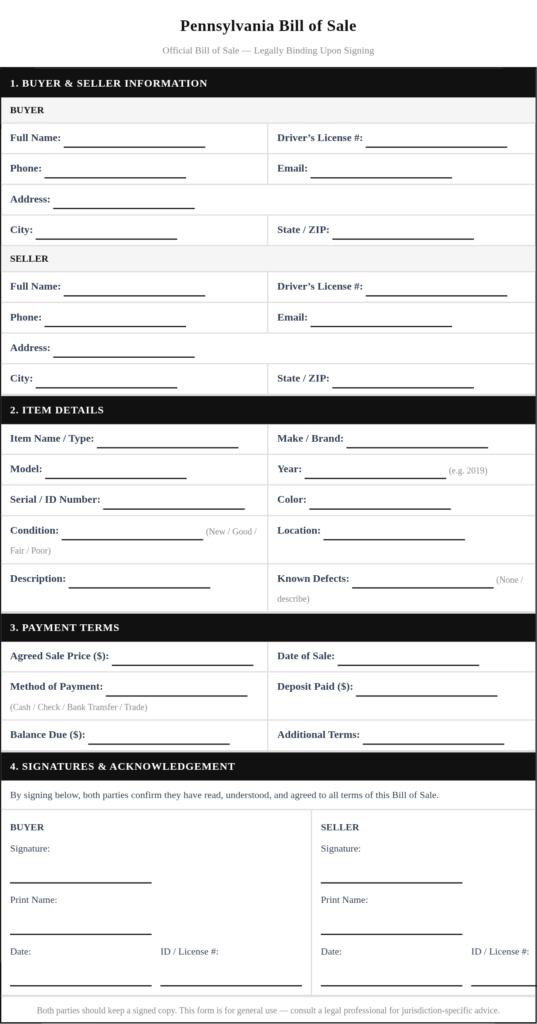 What Is a Pennsylvania Bill of Sale?
A Pennsylvania Bill of Sale is a legal document that records the transfer of ownership for personal property between a seller and a buyer. This written purchase record proves the sale agreement took place and identifies the purchase price, date, and details about the property being sold. Whether you complete a private sale of a vehicle, boat, firearm, or other valuable items, this bill of sale form protects both parties by creating an official record of the transaction. Pennsylvania law does not require a bill of sale for every transaction, but having a signed copy provides important legal protection and serves as proof of ownership transfer.
Documents required in Pennsylvania Bill of Sale
- Valid Government-Issued ID
- Buyer and Seller Information
- Property Description and Sale Details
- Supporting Ownership Records
- Completed Bill of Sale Agreement
Information Included in a Pennsylvania Sale Agreement
- Names and Addresses of Buyer and Seller
- Property Details
- Purchase Price
- Date of Ownership Transfer
- Signatures of Both Parties.
How to Complete a Pennsylvania Bill of Sale Form
- Download or obtain a Pennsylvania bill of sale form that matches the type of property you are selling. Different templates exist for vehicles, boats, firearms, and general personal property.
- Write the full legal names and addresses of both the buyer and seller in the designated spaces. Make sure all contact information is current and accurate.
- Describe the property being sold in detail, including make, model, year, serial number, VIN, or other identifying features. The more specific you are, the better the purchase record protects both parties.
- Enter the sale price and indicate the payment method used for the transaction. If the property is a gift, write 'gift' or '$0' in the price field.
- Include the date of the sale and the location where the transaction takes place. Both parties should verify this information before signing.
- Review the entire purchase agreement together to ensure all details are correct. Check for spelling errors or missing information that could cause problems later.
- Both the buyer and seller sign the bill of sale form in the presence of each other. Each party should keep a signed copy for their records as proof of the property transfer.
How to Notarize a PA Bill of Sale
- Understand that Pennsylvania does not require notarization for most bills of sale. A signed document is legally binding even without a notary seal for transactions involving personal property.
- Consider getting the bill of sale notarized anyway for high-value items or vehicles. A notarized document adds an extra layer of legal protection and can prevent disputes about signatures.
- Locate a notary public at your bank, law office, shipping store, or county courthouse if you decide to notarize. Many notaries charge a small fee for their service, typically between five and ten dollars.
- Bring valid government-issued photo identification for both the buyer and seller. The notary will verify identities before witnessing signatures and applying their official seal.
- Sign the bill of sale in front of the notary, not beforehand. The notary must watch you sign to certify that the signatures are authentic.
- Receive the notarized document and make copies for all parties involved. Keep your signed copy in a safe place with other important legal documents.
FAQs
Q. Is a handwritten bill of sale valid in Pennsylvania?
Yes, a handwritten bill of sale is legally binding in Pennsylvania as long as it includes all necessary details. The sale agreement must identify both parties, describe the property being sold, state the sale price, and include signatures from the buyer and seller. Handwritten documents work just as well as printed forms for creating a legal record of the transaction.
Q. Does Pennsylvania require a bill of sale to be notarized?
Pennsylvania does not require notarization for bills of sale in most situations. The signed document serves as a legally binding purchase record without a notary seal. However, notarizing the bill of sale adds credibility and may help if ownership disputes arise later.
Q. Should both the buyer and seller keep a copy of the bill of sale?
Yes, both parties should keep a signed copy of the bill of sale for their personal records. The buyer needs proof of purchase to establish ownership, while the seller needs evidence that the property transfer occurred. Keeping these purchase records protects both sides if questions about the sale come up in the future.
Q. What information must a Pennsylvania bill of sale include?
A valid bill of sale form must include the names and addresses of the buyer and seller, a detailed description of the property, the sale price, and the date of the transaction. Both parties must sign the document to make it legally binding. For vehicles, include the VIN, make, model, year, and odometer reading.
Q. Can I use a Pennsylvania bill of sale for a vehicle title transfer?
You can use a bill of sale as a purchase record when transferring a vehicle title, but Pennsylvania requires additional paperwork. The buyer must submit the signed title, a completed title application, and proof of insurance to PennDOT. The bill of sale supports the sale agreement but does not replace the official title transfer process required by Pennsylvania sale requirements.
Conclusion
Creating a Pennsylvania Bill of Sale protects both buyers and sellers during any private sale of personal property. This simple legal document establishes a clear record of the transaction, proves the purchase price, and confirms that ownership transferred from one party to another. Even though Pennsylvania does not require a bill of sale for every transaction, having one prevents misunderstandings and provides valuable proof if disputes arise. The process takes only a few minutes and costs nothing if you use a basic form.
Whether you sell a car, boat, electronics, or other valuable items, a signed copy of the sale agreement benefits everyone involved. The buyer gains proof of purchase and legal ownership, while the seller documents that the property transfer occurred and limits future liability. Keep your bill of sale form with other important papers, and make sure both parties receive a copy. This small step creates peace of mind and protects your interests long after the transaction ends.